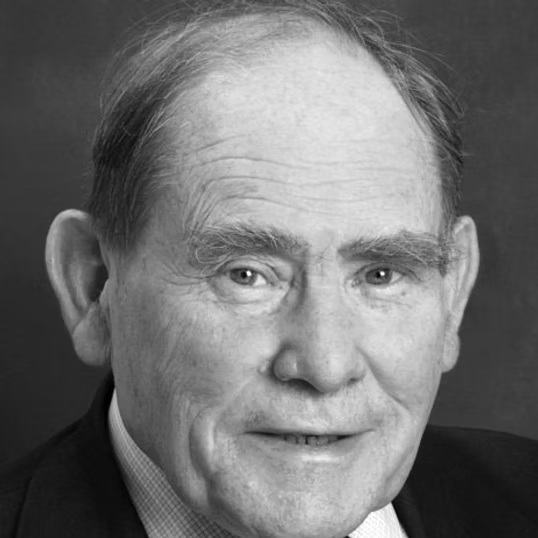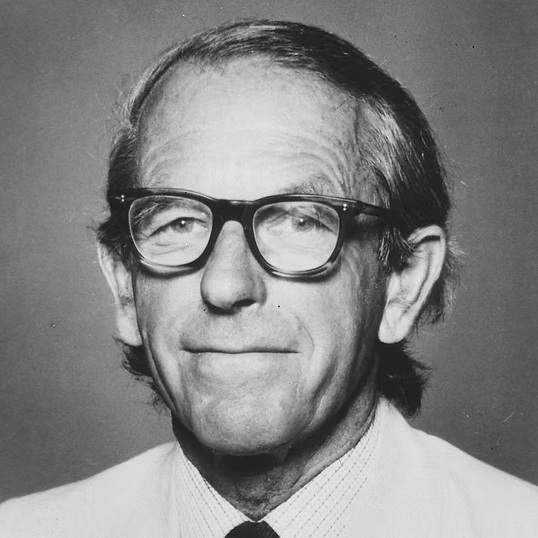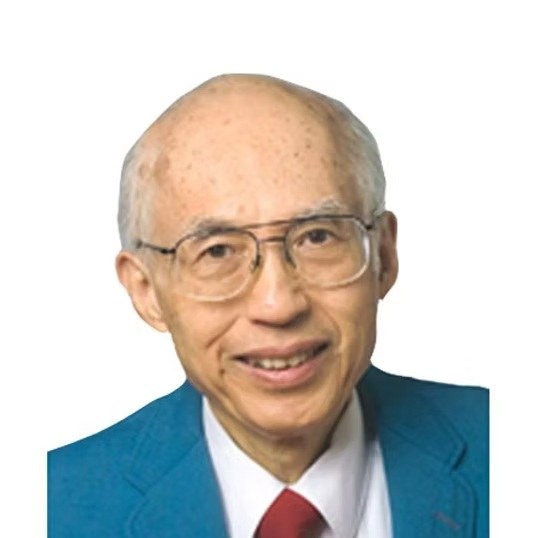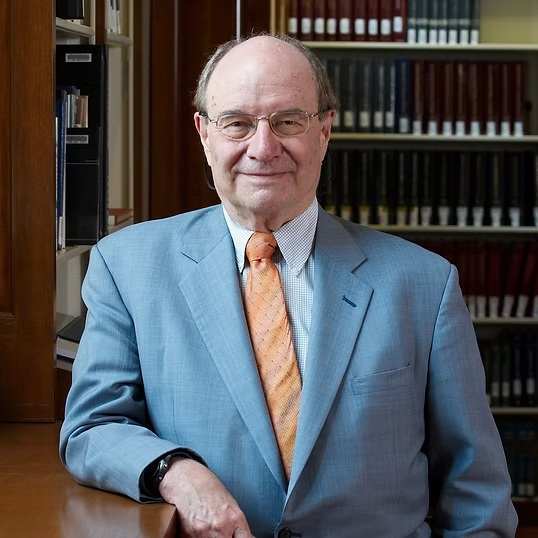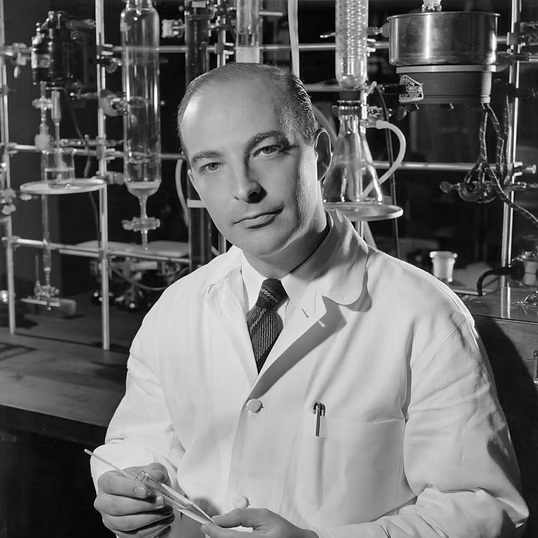
阿瑟·科恩伯格Arthur Kornberg
(1918-2007)(1918–2007)


桑格博士,有时会发生一个重要的科学发现,可以说是“一夜之间”——如果时机成熟并且有必要的背景。你不是那种。蛋白质结构的首次成功测定,是多年坚持不懈、积极工作的结果,逐步接近最终解决问题的方法。当你在 15 年前开始研究胰岛素分子的结构时,你就知道这个问题是一个可怕的问题……如果没有您对摆在面前的任务的全心投入,那么您前进的道路上的许多障碍将无法克服。
Doctor Frederick Sanger. It sometimes happens that an important scientific discovery is made so to say “overnight” – if the time is ripe and the necessary background is there. Yours is not of that kind. The first successful determination of the structure of a protein is the result of many years of persistent and zealous work, in which the final solution of the problem has been approached step by step.You knew when you began to look into the structure of the insulin molecule 15 years ago that the problem was a formidable one.... Without your wholehearted devotion to the task you had set before you, many obstacles on your way would have appeared insurmountable.
蒂塞利乌斯教授1958年诺贝尔奖颁奖典礼致辞
The Nobel Prize Award ceremony speech by Professor A. Tiselius in 1958
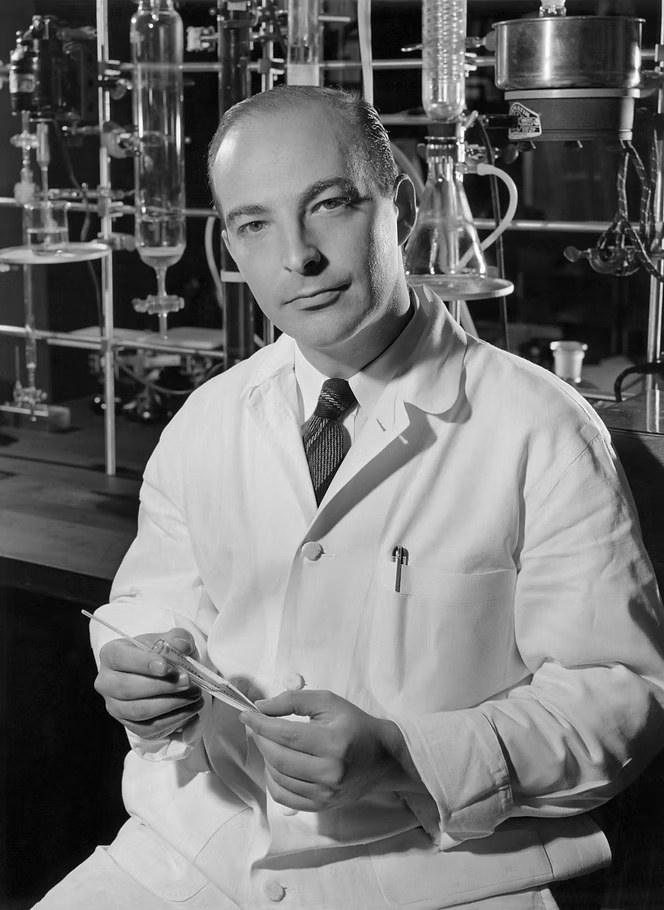
阿瑟·科恩伯格(1918年3月3日-2007年10月26日)是美国生物化学家,于1959年获得诺贝尔生理学-医学奖。科恩伯格出生在纽约的布鲁克林区,父母是东欧的移民,以经营五金店为生。科恩伯格就读于纽约市立大学,学习化学、生物学,1941年取得罗切斯特大学的医学博士学位。毕业后,科恩伯格短暂地担任二战期间美国海军的军医,于1942年加入美国国家卫生研究院(NIH)。1953年科恩伯格任职华盛顿大学微生物系的系主任;1959年入职当时新成立的斯坦福医学院,为生物化学系的行政主任。
在NIH任职期间,科恩伯格曾前往纽约大学医学院,在塞弗罗·奥乔亚(1903-1993)的实验室合作一年;于1947年前往华盛顿大学医学院与卡尔·科里(1986-1984)、格蒂·科里(1896-1957)交流学习,也因此对酶产生兴趣,致力于探寻参与合成多核苷酸链的酶。科恩伯格认为生物化学家应该跳出细胞的局限、在试管中重现细胞中发生的各种反应;并将理论付诸实践——在试管中加入DNA、带有放射性的胸腺嘧啶(构成DNA的四种核苷酸之一)、大肠杆菌的蛋白质碎片,试图在试管中合成DNA。最终,科恩伯格成功地合成了DNA,也找到了对应的酶——DNA聚合酶。而当科恩伯格在1957年向《生物化学杂志》投稿时,审稿人质疑其合成物是否为DNA,并拒绝接受其论文;但在1958年春天,新上任的编辑同意发表科恩伯格的论文。在1959年,科恩伯格因为发现DNA聚合酶而获得诺贝尔生理学-医学奖,与研究RNA合成过程的奥乔亚共享。
Arthur Kornberg (March 3, 1918 – October 26, 2007) was an American biochemist who won the Nobel Prize in Physiology or Medicine 1959. Kornberg was born in Brooklyn, New York, as the son of parents who had emigrated from Eastern Europe and ran a small hardware store. He majored in chemistry and biology at City College of New York and received an M.D. from the University of Rochester in 1941.After briefly serving as a physician in the US Navy, Kornberg joined in the research institute of National Institutes of Health (NIH) in 1942. In 1953, Kornberg became the chairman of the Department of Microbiology at Washington University, and in 1959 he became the Professor and Executive Head of the Biochemistry Department at the newly established Stanford Medical School.
When at the NIH, Kornberg spent a year with Severo Ochoa (1903–1993) at New York University Medical School and studied with Carl and Gerty Cori (1986–1984, 1896–1957) at Washington University School of Medicine in 1947. That made Kornberg turn to the study of enzymes and start searching for an enzyme that could synthesize the polynucleotide chain.As a biochemist, Kornberg felt that he could reconstitute any cellular event in a test tube and set up a reaction containing DNA, radioactive thymidine (a nucleoside), and protein fractions obtained by breaking open Escherichia coli. Kornberg eventually managed to synthesize DNA in a tube and found an enzyme, DNA polymerase. However, when Kornberg reported his results to The Journal of Biological Chemistry in 1957, the reviewers rejected him and refused to acknowledge the product as DNA.In the spring of 1958, a new editor stepped in and accepted the papers. And in 1959, Kornberg’s discovery, together with Ochoa’s independent work on the synthesis of RNA, were recognized by the Nobel Prize in Physiology or Medicine.

弗朗索瓦·雅各布(1920年6月17日-2013年4月19日)是法国分子生物学家,曾获1965年诺贝尔医学奖。雅各布出生于一个犹太家庭,当1940年德军入侵法国时,他正在巴黎大学学习医学。雅各布随即设法逃出巴黎,加入戴高乐的自由法国部队,不幸在1944年腿部中弹,伤势极重且弹片无法全部取出,也因此放弃了成为外科医生。雅各布随即重返校园,1947年完成医学学位、1954年在索邦大学获得自然科学的博士学位。在此期间,雅各布对噬菌体和细菌的基因结构产生兴趣,于1950年加入巴斯德研究所,在安德烈·洛夫(1902-1994)的指导下工作。
在50年代末,雅各布与巴斯德研究所的雅克·莫诺(1910-1976)对大肠杆菌(学名E. coli)进行实验。莫诺发现,当添加乳糖至大肠杆菌的生长环境中时,大肠杆菌能自主产生β-半乳糖苷酶以消化乳糖,但莫诺无法解释为什么大肠杆菌只在有乳糖的时候产生β-半乳糖苷酶。在访问学者亚瑟·帕迪(1921-2019)的帮助下,雅各布和莫诺发现,负责编码β-半乳糖苷酶的是lacZ基因,而基因lacI能抑制β-半乳糖苷酶的产生,这就解释了为什么在正常情况下大肠杆菌不产生β-半乳糖苷酶。此外,雅各布和洛夫发现,当噬菌体λ感染大肠杆菌时,基因lacI将不被表达,并进一步证实了基因lacI对产生β-半乳糖苷酶的抑制作用。雅各布、洛夫、莫诺因发现有抑制作用的基因而获得1965年的诺贝尔医学奖。
François Jacob (17 June 1920 – 19 April 2013) was a French molecular biologist who was awarded the 1965 Nobel Prize in Medicine with Jacques Monod (1910–1976) and André Lwoff (1902–1994). Jacob was born to a Jewish family and went to the University of Paris to study medicine, but his education was interrupted in 1940 when Germans invaded France. Jacob managed to escape from Paris and served Charles de Gaulle’s Free French forces until 1944 when he got seriously injured.The wounds prevented Jacob from becoming a surgeon and he went back to finish his medical degree in 1947 and received a doctorate in science in 1954 at Sorbonne University. In the meantime, Jacob became so interested in researching about phage and bacteria that he applied to work with Lwoff at the Pasteur Institute, and Lwoff agreed in 1950.
In the late 1950s, Jacob collaborated with another fellow Pastorien, Jacques Monod, and experimented on the bacteria Escherichia coli (E. coli). Monod discovered that when the sugar lactose is added to growing E. coli, E. coli produces the enzyme β-galactosidase for digestion. Monod wondered how β-galactosidase appears suddenly.With the help of the visiting scientist Arthur Pardee (1921–2019), the researchers found that the lacZ gene, which is responsible for coding β-galactosidase, can be oppressed by the gene lacl. Jacob and Lwoff provided more evidences that the gene lacl acts as a repressor by using bacteriophage λ to infect E. Coli and inhibit the gene lacl. The repressor model in gene expression brought the three scientists Noble Prize in Medicine in 1965.
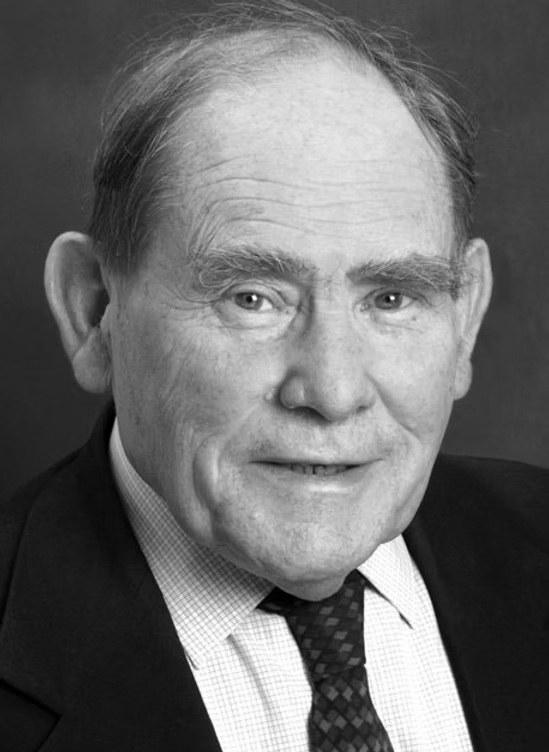
悉尼·布伦纳(1927年1月13日-2019年4月5日)是南非生物学家,在2002年获得诺贝尔生理学-医学奖。布伦纳出生在南非的杰米斯顿,父母为犹太移民,家庭经济情况并不富裕。布伦纳自小展现非凡的学习天赋,仅用一年时间便完成小学一至三年级的功课,在15岁时考入南非约翰内斯堡的威特沃特斯兰德大学。由于其岁数太小,不符合攻读医学学位的要求,布伦纳于是在1946年取得组织学的荣誉学士学位,1947年获得解剖学的硕士学位,再在1951年攻读下医学学位。次年,牛津大学物理化学系录取了布伦纳并提供奖学金,其在1954年获得博士学位。在此期间,布伦纳在1953年4月访问剑桥大学,亲眼目睹了詹姆斯·沃森与弗朗西斯·克里克的DNA双螺旋模型,布伦纳称之为自己人生中的决定性时刻。
在加州大学伯克利分校完成博士后学位之后,布伦纳加入位于英国剑桥的医学研究委员会(该委员会在1962年更名为分子生物学实验室,LMB)。在20世纪50年代,布伦纳便推论DNA核苷酸链上每三个核苷酸可以确定一个氨基酸,指导后续蛋白质的合成;在1961年布伦纳与克里克用实验证实了这一点。同年,布伦纳与弗朗索瓦·雅各布(1920-2013)、马修·梅塞尔森(1930-)共同证明了细胞中存在信使RNA。60年代中期,布伦纳决定研究秀丽隐杆线虫(学名C. elegans),并从中破译了负责编码细胞死亡、个体发育的基因。布伦纳也因对秀丽隐杆线虫的研究与同事罗伯特·霍维茨(1947-)、约翰·萨尔斯顿(1942-2018)共享2002年诺贝尔生理学-医学奖。但布伦纳坚称,这应是他的第二个诺贝尔奖,因为其早先研究DNA、RNA所得出的成果也毫不逊色。
Sydney Brenner (13 January 1927 – 5 April 2019) was a South African biologist and the laurate of the Nobel Prize in Physiology or Medicine in 2002. Brenner was born in Germiston, South Africa, to poor immigrant parents. He completed his first 3 years of primary school in a year, and joined the University of Witwatersrand in Johannesburg, South Africa, at the age of fifteen. Because he was too young to practice medicine, Brenner earned a B.Sc. Honours in histology in 1946 and a M.Sc. degree in anatomy in 1947, before receiving a medical degree in 1951.Next year Brenner won a scholarship to the Department of Physical Chemistry at Oxford and received his doctorate in 1954. He paid a visit to Cambridge in April 1953, and was among the first to view James Watson and Francis Crick’s double helix model of DNA – a defining moment in life as Brenner recalled.
After a postdoc at the University of California, Berkeley, Brenner joined the Medical Research Council in Cambridge, England, which became the Laboratory of Molecular Biology (LMB) in 1962. In the 1950s, Brenner proved theoretically that DNA bases are read in groups of three – every three nucleotides specify one amino acid that constitutes proteins, and he confirmed this in lab with Crick in 1961.In the same year, with François Jacob (1920–2013) and Matthew Meselson (1930–), Brenner demonstrated the existence of messenger RNA. In the mid-1960s, Brenner decided to focus on whole organism and picked Caenorhabditis elegans, from which he deciphered the genetics of programmed cell death and animal development.It is for this pioneering work on C. elegans that Brenner received the 2002 Noble Prize in Physiology or Medicine together with two colleagues Bob Horvitz (1947–) and John Sulston (1942–2018).Brenner maintained that it should have been his second Nobel Prize for his earlier work on genetic coding having been equally worthy.
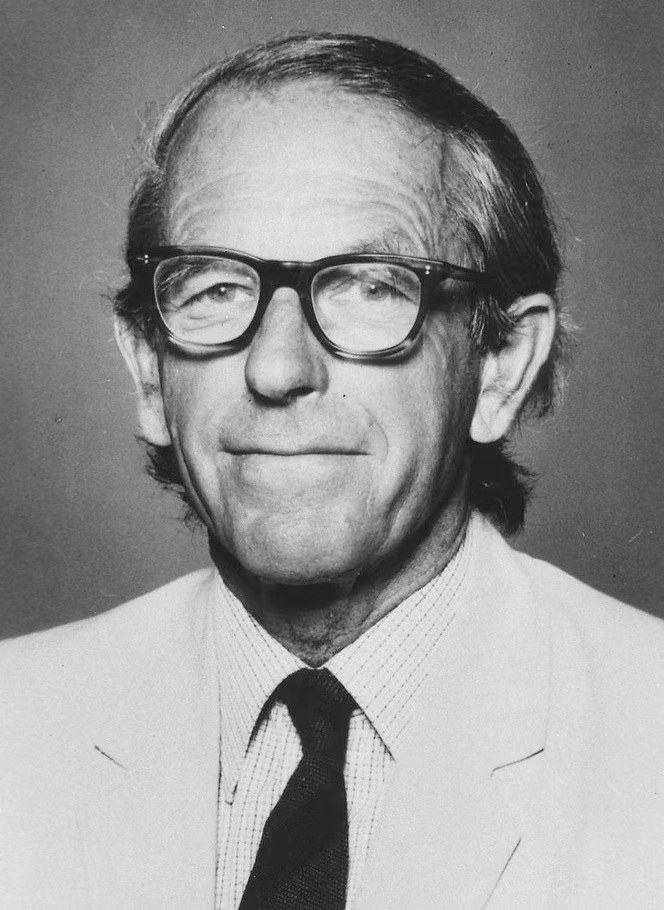
弗雷德里克·桑格(1918年8月13日-2013年11月19日)是英国生物化学家,曾两次获得诺贝尔化学奖,也是第四位两次获得诺贝尔奖的学者。桑格出生在英国的格洛斯特郡,是贵格会教徒,自小便被教育要自力更生。桑格就读于剑桥大学,于1939年获得生物化学学士学位、1943年获得博士学位。在此期间,桑格在1940年与剑桥大学的经济系学生玛格丽特·琼·豪结婚,婚后育有两个儿子和一个女儿,家庭生活幸福美满。
1943年,桑格加入了阿尔伯特·奇布纳尔(1894-1988)在剑桥大学的研究小组,负责研究蛋白质的结构。尽管当时大多数科学家认为蛋白质中的氨基酸是随机排列的,桑格选择研究胰岛素,并分别在1952年、1951年破解出构成胰岛素的两条多肽链——A链和B链——的氨基酸序列;也因此获得1958年的诺贝尔奖。1962年桑格加入分子生物学实验室(当时为医学研究委员会(MRC)),研究如何检测RNA、DNA的碱基对序列。桑格先在1974年提出“加减法”(plus and minus),最终在1977年提出双脱氧测序法:在DNA复制时加入抑制剂(通常为二脱氧衍生物),随机地终止DNA复制,得到不同长度的核苷酸链,以便直接读取碱基对顺序。双脱氧测序法又称“桑格测序法”,能在一天内对几百个DNA碱基对进行测序,大幅提高测序效率。桑格也因此在1980年被授予第二个诺贝尔奖,与沃尔特·吉尔伯特(1932-)、保罗·伯格(1926-)共享。
桑格在1985年退休。据悉尼·布伦纳(1927-2019)回忆,当桑格被问及是否愿意保留其在医学研究委员会的办公室时,他回答:“不,我已经受够了。我想造一艘船,花些时间做做园艺。”此后,桑格也确实成为了一位花园里的“隐者”。
Frederick Sanger (13 August 1918 –19 November 2013) was an English biochemist who twice won the Nobel Prize in Chemistry, and the fourth person with two Nobel Prizes. Sanger was born in Gloucestershire, UK. Raised as a Quaker, Sanger learned self-reliance and practical manual skills as a school boy. Sanger received his bachelor’s degree in biochemistry in 1939 and his doctorate in 1943, both from the University of Cambridge.Meanwhile, Sanger married Margaret Joan Howe, an economics graduate at Cambridge, in 1940. They had two sons and one daughter and remained married until her death in 2012.
Sanger joined Albert Chibnall’s (1894–1988) research group in 1943 at Cambridge and tried to determine the exact chemical structure of proteins, which was controversial at that time as most scientists believed the arrangement of different amino acids in a protein to be random. Sanger chose to work on insulin and eventually figured out the complete amino acid sequence of the two polypeptide chains of insulin, A and B, in 1952 and 1951, and this brought him the Noble Prize in 1958.Sanger joined the Medical Research Council (MRC) Laboratory of Molecular Biology in 1962 and began to develop methods for sequencing RNA and DNA. He first came up with the “plus and minus” method in 1974, and the chain terminator sequencing in 1977 – the latter adds a terminator, the dideoxy derivatives or the arabino nucleosides, to terminate the replication of DNA.The chain terminator sequencing is also known as “Sanger sequencing”, and it enables to sequence several hundred DNA bases within one day, a process that previously took many years. And Sanger received a second Noble Prize in 1980, along with Walter Gilbert (1932–) and Paul Berg (1926–).
Sanger retired in 1985. According to Sydney Brenner (1927–2019), when Sanger was asked whether he would like to keep his office at MRC after retirement, he answered: “No. I have had enough. I want to build a boat and spend some time messing about in my garden.” And he did spend most of the time working in the garden ever since.
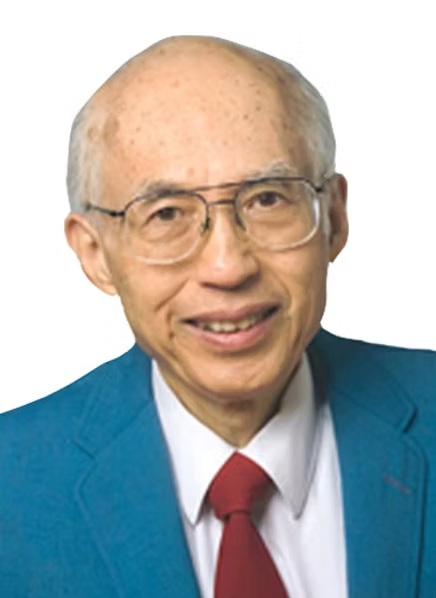
吴瑞(1928-2008),祖籍福州,1928年8月14日生于北京,生物化学家,DNA测序、基因工程、生物技术领域的重要开创学者之一,中国台湾“中央研究院”院士、中国工程院外籍院士,美国康奈尔大学教授。
从1968年起,经过三年艰苦努力,他成功地建立起世界上第一个DNA核苷酸序列分析方法。随后,着手研究使引物延伸方法成为DNA测序的一种基本方法,获得成功。通过使用吴瑞建立的这种方法,许多科学家已确定众多基因的DNA序列。迄今为止,已有10多亿的核苷酸顺序被确定,其中所含信息已被广泛应用于医学、农业和工业等整个生物科学及生物工程领域。吴瑞成为DNA测序方面的重要学科带头人。
此外,吴瑞和他的同事们还首创在基因克隆过程中,以合成的寡核苷酸作为衔接子和接头来提高平末端DNA克隆效率的方法。该法已成为生物工程中一种高效的常规方法。
1988年,吴瑞实验室培育成功转基因水稻。他的实验室由于采取正确决策,仅用两年时间就赶超其他实验室,成为世界上研制转基因水稻领域的领先者之一。吴瑞在水稻研究方面的重要贡献有二:一是最早将粒子枪用于植物的转基因技术中,大大提高植物转化/再生的成功率。二是首次用遗传工程方法,将来自不同物种的耐旱、耐盐等基因转入水稻细胞,培育出具有耐旱、耐盐性能的转基因水稻植株。
Rui Wu (1928–2008), whose family origin was Fuzhou, was born in Beijing on August 14th, 1928. Biochemist, one of the most vital pioneering scholars in the fields of DNA sequencing, genetic engineering, and biotechnology, academician of the "Academia Sinica" in Taiwan, a foreign academician of the Chinese Academy of Engineering, and a professor at Cornell University.
From 1968, after three years of hard work, he established the world's first DNA nucleotide sequence analysis method successfully. Subsequently, the study of making the primer extension method a basic method for DNA sequencing was successful. Using this method developed by Rui Wu, many scientists have confirmed the DNA sequences of numerous genes. To date, more than a billion nucleotide sequences have been verified, and the information contained in them has been widely used throughout the fields of bioscience and bioengineering, including medicine, agriculture, and industry. Rui Wu became an important subject leader in DNA sequencing.
In addition, Rui Wu and his colleagues also pioneered the method of using synthetic oligonucleotides as adaptors and linkers to improve the efficiency of blunt-ended DNA cloning in the process of gene cloning. This method has become an efficient routine method in bioengineering.
In 1988, Rui Wu's laboratory successfully cultivated transgenic rice. Thanks to the right decision, his lab overtook other labs in just two years and became one of the world's leaders in the field of genetically modified rice. There are two important contributions of Rui Wu in rice research: First, the first use of particle guns in transgenic technology of plants has greatly improved the success rate of plant transformation/regeneration.The second is to use genetic engineering methods for the first time to transfer drought and salt tolerance genes from different species into rice cells, and cultivate transgenic rice plants with drought and salt tolerance.
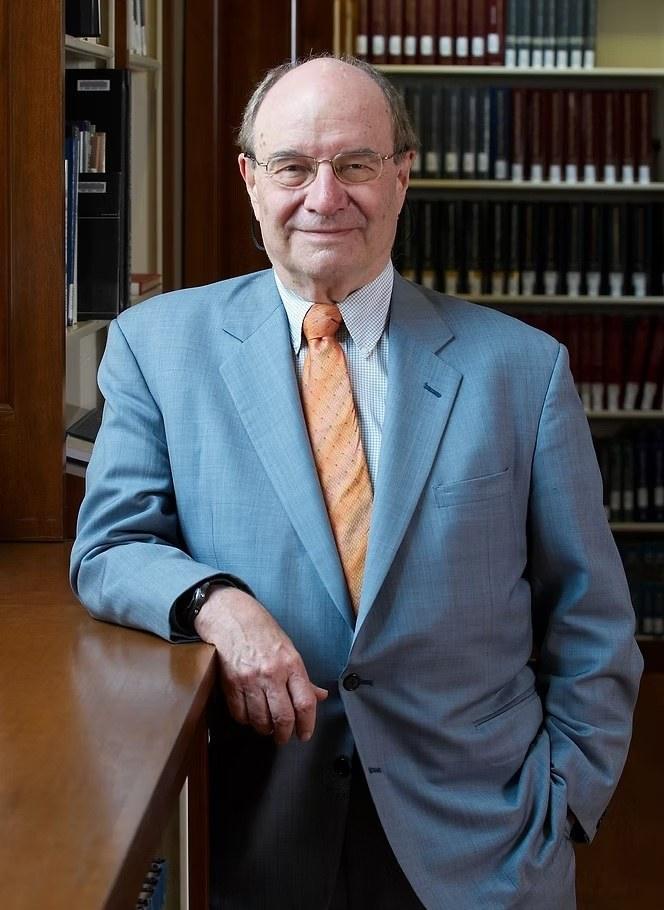
沃尔特·吉尔伯特(生于1932年3月21日)是美国生物化学家、物理学家、分子生物学先驱,也是1980年诺贝尔化学奖得主。吉尔伯特在1953年取得哈佛大学化学和物理学专业的荣誉学士学位,1954年获得物理学专业的硕士学位;而后前往剑桥大学攻读博士学位,并在剑桥结识了刚刚宣布发现DNA双螺旋结构的詹姆斯·沃森(1928-)和弗朗西斯·克里克(1916-2004)。在沃森的邀请下,吉尔伯特加入其分离信使RNA的项目,在此期间对分子生物学产生了浓厚兴趣。吉尔伯特在1957年获得数学的博士学位,1959年回到哈佛大学担任物理学助理教授,并努力弥补自己在生物化学方面的欠缺,终于在1964年成为哈佛大学生物物理学的终身副教授,并在1968年转为正教授。
和弗朗索瓦·雅各布(1920-2013)一样,吉尔伯特试图探索为什么大肠杆菌在没有乳糖的情况,其基因lac不指导产生β-半乳糖苷酶。吉尔伯特猜想这是因为有起抑制作用的物质附着在基因lac上,并在1970年精确定位了该抑制物在基因lac上的附着点。在此之后,吉尔伯特与艾伦·马克萨姆(1946-)合作,成功地利用凝胶电泳和X射线曝光来确定DNA片段的序列信息。吉尔伯特也因此与同样开发了测序技术的英国科学家弗雷德里克·桑格(1918-2013)分享了1980年诺贝尔化学奖的一半,而美国生物化学家保罗·伯格(1926-)因基因重组技术获得了另一半。
Walter Gilbert (born March 21, 1932) is an American biochemist, physicist, molecular biology pioneer, and the winner of 1980 Nobel laureate in chemistry. Gilbert entered Harvard University in 1949 and earned a baccalaureate degree with a major in chemistry and physics in 1953, and a master’s degree in physics in 1954. He then went to Cambridge University to pursue a doctorate degree in mathematics, where he met James D. Watson (1928–) and Francis H. C. Crick (1916–2004), who had just claimed the double-helix structure of DNA.At Watson’s invitation, Gilbert joined him and his colleagues in isolating the messenger RNA and developed an interest in molecular biology. While Gilbert received his Ph.D. in 1957 and returned to Harvard as an assistant professor in physics in 1959, he worked hard to make up for his lack of formal training in biochemistry and became a tenured associate professor of biophysics at Harvard in 1964, and a full professor in 1968.
Just as François Jacob (1920–2013), Gilbert worked on the bacteria Escherichia coli (E. coli) and became interested in a substance which represses the gene lac from producing β-galactosidase in the absence of the milk sugar lactose; by 1970 he determined the precise region of the gene lac to which the repressor bonds. Moreover, working with graduate student Allan Maxam (1946–), Gilbert successfully used gel electrophoresis and X-ray exposure to determine the sequences of DNA fragments.For that, Gilbert shared half of the 1980 Nobel Prize in chemistry with the British scientist Fredrick Sanger who also developed a sequencing technique (1918–2013), with the other half going to American biochemist Paul Berg (1926–).
除了是著名的科学家,吉尔伯特还是成功的企业家,他致力于开发、销售生化技术。在1978年,吉尔伯特和一群风险投资家一拍即合,创办了一家生物技术公司。1987年,他宣布试图测序人类DNA,并将创建自己的公司对基因序列信息进行版权保护并出售该信息。虽然他没能筹得足够资金,美国政府应允每年出资200万美元支持其研究。吉尔伯特鼎力支持测序人类基因,认为这是大势所趋,在一定程度上推动了于1990年正式启动的人类基因组计划。
In addition to a renowned scientist, Gilbert is also famous for capitalizing molecular biology – developing and selling biochemical technologies. He started a biotechnology firm, Biogen, with a group of venture capitalists in 1978. In 1987 he announced to create his own company, which would sequence human DNA, copyright the information, and sell it. Though he failed to get adequate funds for that project, he did win a two-million-dollar annual grant from the U.S. government, before the Human Genome Project formally launched in 1900.
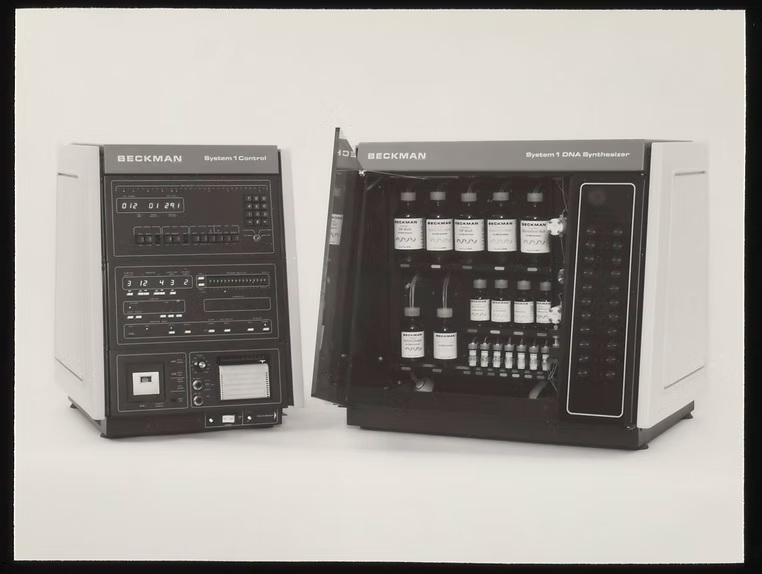
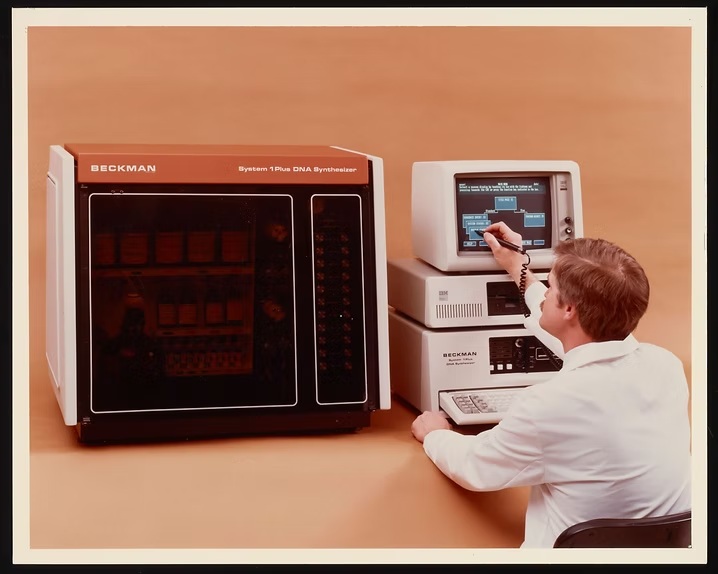
This combination of hardware and software allowed users to program a sequence, check reagent levels, and perform DNA synthesis using phosphoramidite chemistry. The control module in the color photograph included an IBM PC with a color monitor, keyboard, light pen, system interface with a strip chart recorder, and the Beckman DNA synthesis software on a disk.
Illig, Russell. “Beckman System 1 Plus DNA Synthesizer,” circa 1985. Beckman Historical Collection, Box 59, Folder 121. Science History Institute. Philadelphia.
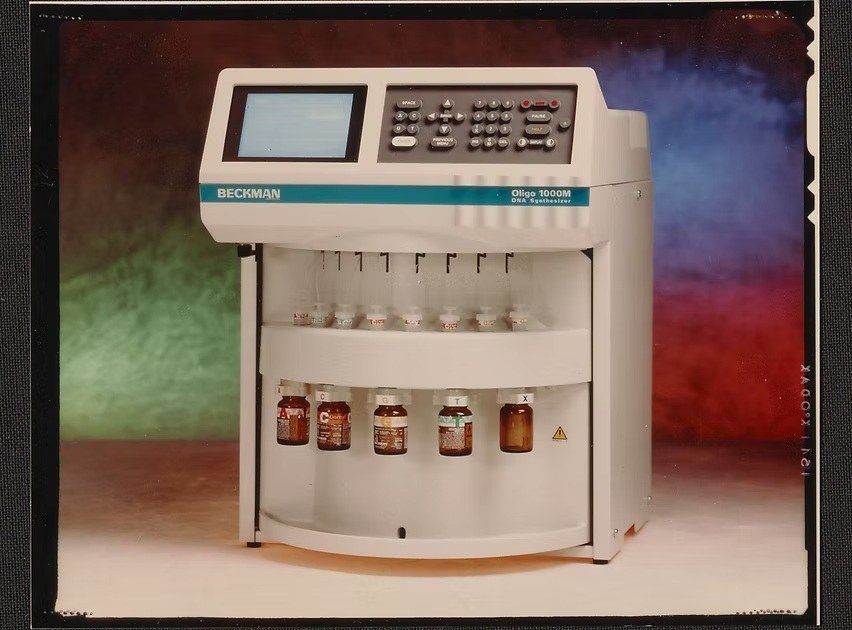
“Beckman Oligo 1000M DNA Synthesizer,” 1990–1999. Beckman Historical Collection, Box 84.
Science History Institute. Philadelphia.