马克斯·德尔布吕克Max Delbrück
(1906-1981)(1906-1981)


生命有机体在不断增加自己的熵,或者可以说是在产生正熵,从而趋向于危险的最大熵状态,那就是死亡。要想摆脱死亡或者活着,只有从环境中不断吸取负熵。我们很快就会明白,负熵是非常正面的东西。有机体正是以负熵为生的。或者不那么悖谬地说,新陈代谢的本质是使有机体成功消除了它活着时不得不产生的所有熵。
Thus a living organism continually increases its entropy -or, as you may say, produces positive entropy -and thus tends to approach the dangerous state of maximum entropy, which is of death. It can only keep aloof from it, i.e. alive, by continually drawing from its environment negative entropy -which is something very positive as we shall immediately see. What an organism feeds upon is negative entropy. Or, to put it less paradoxically, the essential thing in metabolism is that the organism succeeds in freeing itself from all the entropy it cannot help producing while alive.
薛定谔《生命是什么》
Schrodinger, What is Life
(1906-1981)(1906-1981)
(1912-1991)(1912-1991)
.jpg)
(1887-1961)(1887-1961)
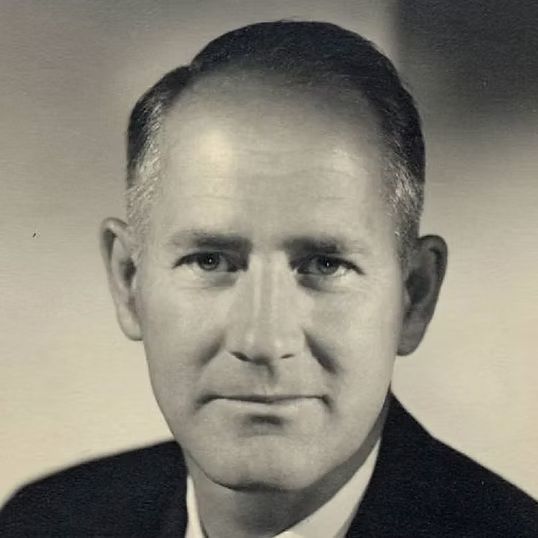
(1903-1989)(1903-1989)
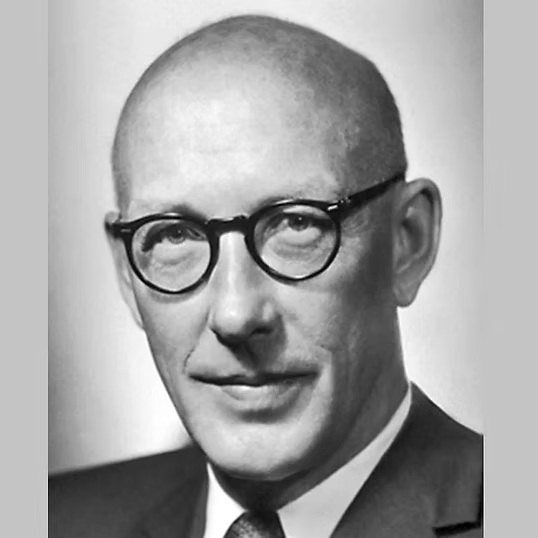
(1909-1975)(1909-1975)
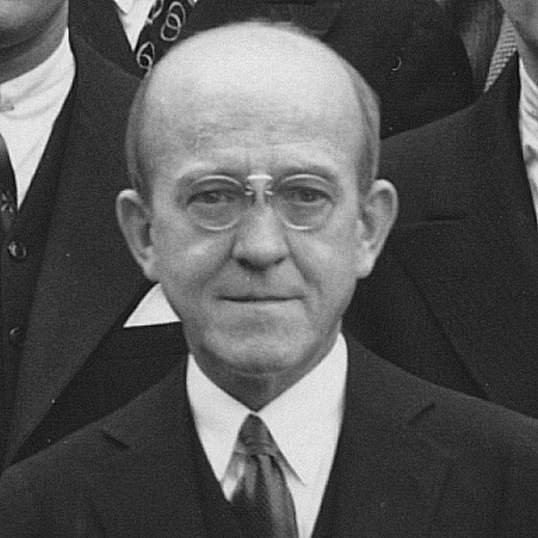
(1877-1955)(1877-1955)
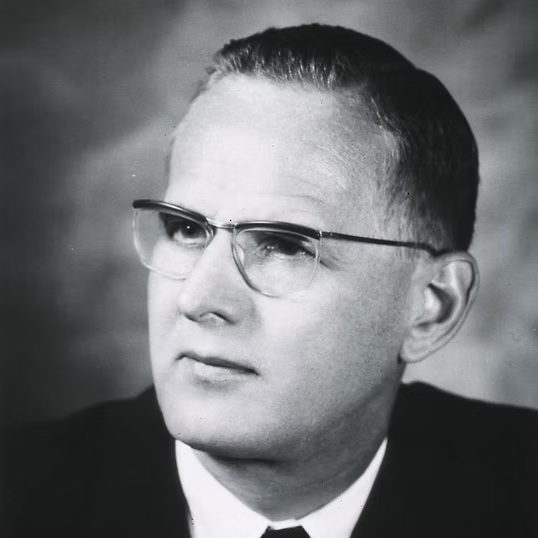
(1911-2005)(1911-2005)
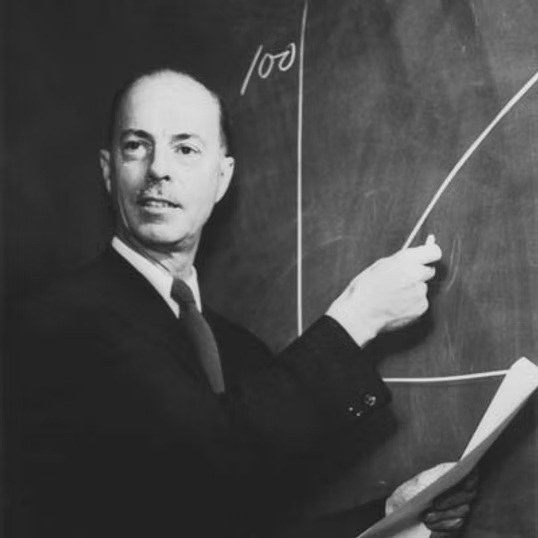
(1909-1972)(1909-1972)
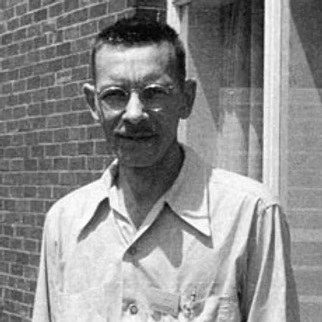
(1908-1997)(1908-1997)
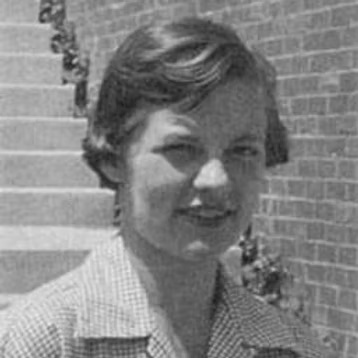
(1927-2003)(1927-2003)
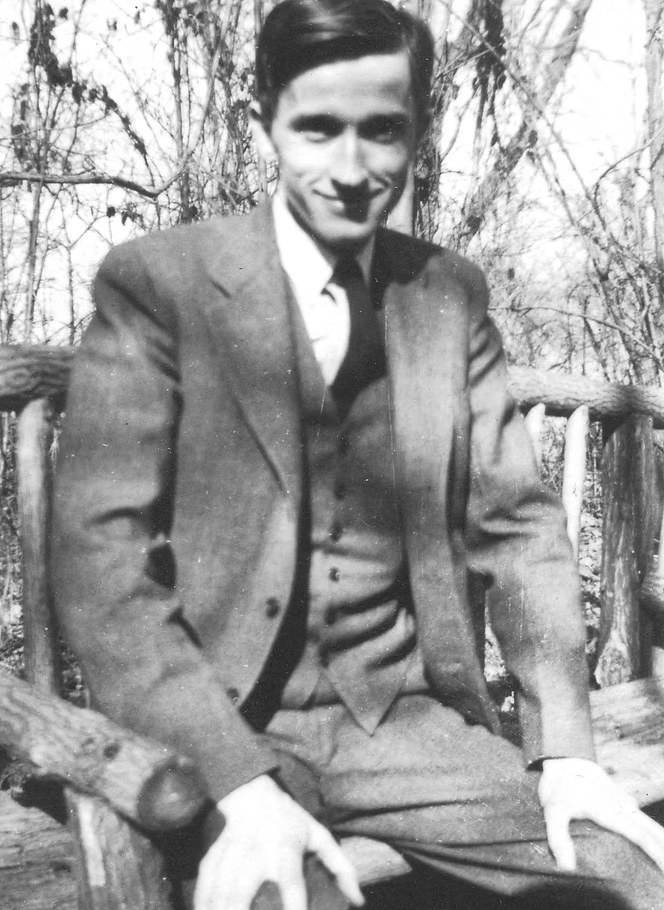
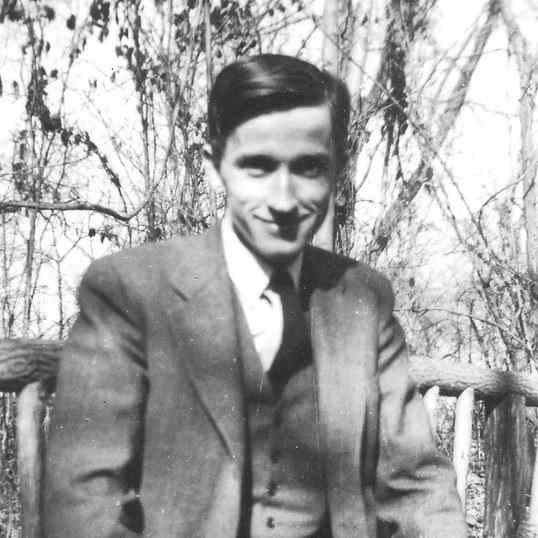
马克斯·德尔布吕克(Max Delbruck),1906年9月4日生于德国柏林,1981年3月9日卒于美国加利福尼亚州帕萨迪纳,德国出生的美国生物学家,分子遗传学研究的先驱。他因在噬菌体(侵袭细菌的病毒)方面的卓越工作,与阿弗雷德·赫希(Alfred Day Hershey)和萨尔瓦多·卢瑞亚(Salvador Luria)一起被授予1969年诺贝尔生理学或医学奖。
德尔布吕克对噬菌体的兴趣是在柏林威廉皇帝化学研究所(1932-37)担任研究助理时被激发的。作为一名来自纳粹德国的难民,德尔布吕克于1937年前往美国,并于1945年成为美国公民。他担任过加州理工学院(1937-39;1947-81年)和范德比尔特大学(1940-47 年)的教员。
1939年,德尔布吕克发现了一个培养噬菌体的只需一步的过程,经过一个小时的潜伏期后,其将繁殖产生数十万个后代。德尔布吕克很快开始与卢瑞亚合作,并于1943年宣布他们发现被噬菌体感染的细菌可以经历自发突变,使其对噬菌体免疫。1946年,德尔布吕克和赫希各自独立发现,不同种类病毒的遗传物质可以结合在一起,创造出新型病毒,而这个过程以前被认为仅限于更高的有性繁殖的生命形式。
Max Delbrück, (born Sept. 4, 1906, Berlin, Ger.—died March 9, 1981, Pasadena, Calif., U.S.), German-born U.S. biologist, a pioneer in the study of molecular genetics. With Alfred Day Hershey and Salvador Luria, he was awarded the 1969 Nobel Prize for Physiology or Medicine for work on bacteriophages—viruses that infect bacteria.
Delbrück received a Ph.D. in physics (1930) from the University of Göttingen. His interest in bacteriophages was aroused while he was a research assistant at the Kaiser Wilhelm Institute for Chemistry in Berlin (1932–37). A refugee from Nazi Germany, Delbrück went to the United States in 1937, serving as a faculty member of the California Institute of Technology (1937–39; 1947–81) and of Vanderbilt University (1940–47). He became a U.S. citizen in 1945.
In 1939 Delbrück discovered a one-step process for growing bacteriophages that, after a one-hour latent period, would multiply to produce several hundred thousands of progeny. Delbrück soon began to collaborate with Luria, and in 1943 they announced their discovery that a bacterium that has been infected by a bacteriophage can undergo spontaneous mutations so that it becomes immune to the phage. In 1946 Delbrück and Hershey independently discovered that the genetic material of different kinds of viruses can combine to create new types of viruses. This process was previously believed to be limited to higher, sexually reproducing forms of life.
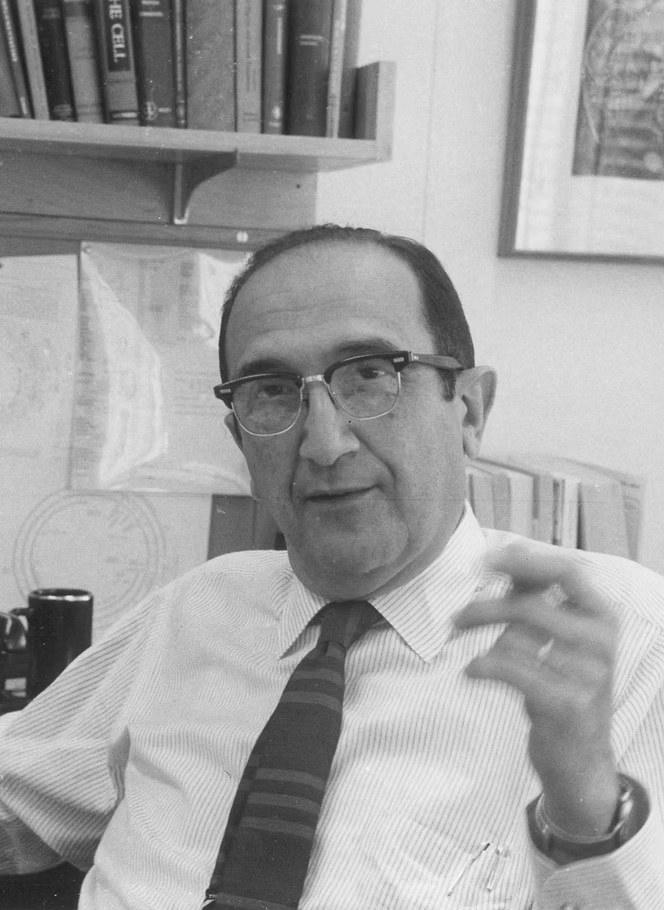
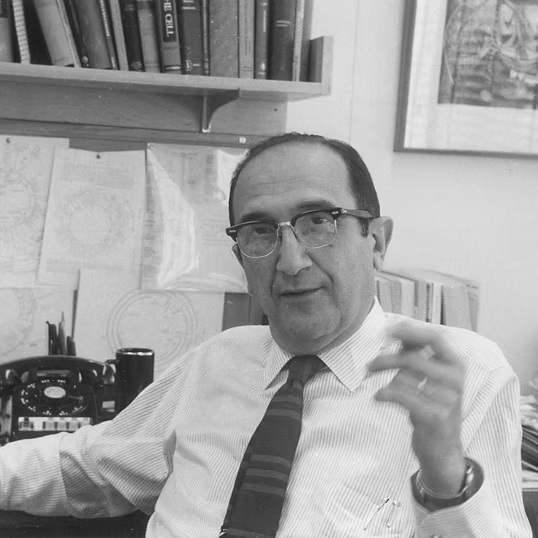
萨尔瓦多·卢里亚(Salvador Luria),全名萨尔瓦多·爱德华·卢里亚(Salvador Edward Luria),1912年8月13日出生于意大利都灵,1991年2月6日卒于美国马萨诸塞州列克星敦,意大利出生的美国生物学家。他因对噬菌体(侵袭细菌的病毒)的卓越研究,于1969年与马克斯·德尔布吕克(Max Delbrück)和阿弗雷德·赫希(Alfred Day Hershey)一起获得诺贝尔生理学或医学奖。
卢里亚于1938年逃离意大利前往法国,并在巴黎巴斯德研究所学习噬菌体研究技术后。他于1940年前往美国,抵美后不久,遇到了德尔布吕克;通过他,卢里亚参与了美国噬菌体小组,这是一个致力于解决病毒自我复制问题的非正式科学组织。
1942年,卢里亚与该小组的一名成员合作,获得了噬菌体颗粒的电子显微照片之一,这证实了早期对它们的描述:它们由圆头和细尾巴组成。1943年,卢里亚和德尔布吕克共同发表了一篇论文,表明病毒的遗传物质会发生永久性的变化,这与当时的观点相反。同年,他和德尔布吕克设计了波动测试,该测试提供了实验证据,证明噬菌体抗性细菌是自发突变的结果,而不是对环境变化的直接反应。1945年,赫希和卢里亚不仅证明了这种细菌突变体的存在,还证明了自发噬菌体突变体的存在。
Salvador Luria, in full Salvador Edward Luria, (born Aug. 13, 1912, Turin, Italy—died Feb. 6, 1991, Lexington, Mass., U.S.), Italian-born American biologist who (with Max Delbrück and Alfred Day Hershey) won the Nobel Prize for Physiology or Medicine in 1969 for research on bacteriophages, viruses that infect bacteria.
Luria graduated from the University of Turin in 1935 and became a radiology specialist. He fled Italy for France in 1938 and went to the United States in 1940 after learning the techniques of phage research at the Pasteur Institute in Paris. Soon after his arrival, he met Delbrück, through whom he became involved with the American Phage Group, an informal scientific organization devoted to solving the problems of viral self-replication.
Working with a member of the group in 1942, Luria obtained one of the electron micrographs of phage particles, which confirmed earlier descriptions of them as consisting of a round head and a thin tail. In 1943 Luria and Delbrück published a paper showing that, contrary to the current view, viruses undergo permanent changes in their hereditary material. That same year he and Delbrück devised the fluctuation test, which provided experimental evidence that phage-resistant bacteria were the result of spontaneous mutations rather than a direct response to changes in the environment. In 1945 Hershey and Luria demonstrated the existence not only of such bacterial mutants but also of spontaneous phage mutants.
1974年,卢里亚成为了麻省理工学院癌症研究中心主任。他写作了一本大学教科书《普通病毒学》(1953年),也写了一本面向普通读者的通俗教科书《生活:未完成的实验》(1973年)。
Luria became Sedgwick professor of biology at the Massachusetts Institute of Technology in 1964. In 1974 he became director of the Center for Cancer Research at MIT. He was an author of a college textbook, General Virology (1953), and a popular text for the general reader, Life: The Unfinished Experiment (1973).
-02.jpg)
薛定谔1887年8月12日出生于奥地利维也纳,1961年1月4日卒于维也纳,获得诺贝尔奖的奥地利物理学家,其开创性的波动方程改变了量子理论的面貌。
薛定谔11岁之前在家由私人教师教书,之后就读于维也纳的Akademisches Gymnasium。他继续进入维也纳大学,在那里他主要专注于物理学的研究,并受到另一位年轻物理学家弗里茨·哈森诺尔(Fritz Hasenohrl)的强烈影响。薛定谔于1910年毕业,获得物理学博士学位。之后,他在该机构担任了几年的助理,但于1914年被征召参加第一次世界大战,在意大利的奥匈帝国军队中担任炮兵军官。回到平民生活后,薛定谔于1920年与安娜玛丽·贝尔特尔(Annemarie Bertel)结婚。在1921年加入苏黎世大学之前,他还在斯图加特大学、耶拿大学和布雷斯劳大学等地担任过教职员工。
在苏黎世大学的六年时间,是薛定谔物理学生涯中最重要的时期之一。薛定谔在1925年发现了物理学家路易斯·德布罗意(Louis de Broglie)的工作,这激发了薛定谔对解释原子中的电子将作为波移动的兴趣。1926年,他写了一篇革命性的论文,强调了“薛定谔波动方程”。他与英国物理学家P.A.狄拉克(P.A.M. Dirac)一起获得了1933年诺贝尔物理学奖。
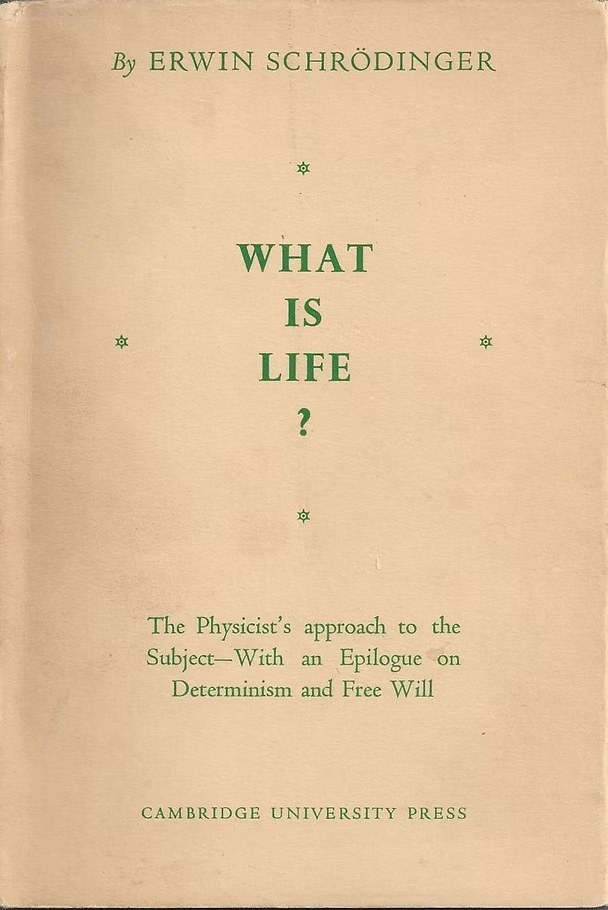
1943年2月,薛定谔在都柏林三一学院做了演讲,次年,他依据这次演讲写成《生命是什么:活细胞的物理观》,试图展示量子物理学如何被用来解释遗传结构的稳定性,其中的一些观点,如遗传物质是“非周期性晶体”、生命依赖“负熵”为生,对后来的研究者给予很大的启发。
Erwin Schrödinger (born August 12, 1887, Vienna, Austria—died January 4, 1961, Vienna) was a Nobel Prize-winning Austrian physicist whose groundbreaking wave equation changed the face of quantum theory.
Schrödinger was taught at home by private teachers until he was 11 years old, and then attended Vienna's Akademisches Gymnasium. He went on to enter the University of Vienna, where he focused primarily on the study of physics and was strongly influenced by another young physicist, Fritz Hasenöhrl, and graduated with a Ph.D. in physics in 1910. Afterward, he worked for a few years at the institution as an assistant but was drafted into World War I in 1914, serving with Austro-Hungarian military forces in Italy as an artillery officer. Upon returning to civilian life, Schrödinger married Annemarie Bertel in 1920. He also took on a number of faculty/staff positions at places like the University of Stuttgart, the University of Jena and the University of Breslau, before joining the University of Zurich in 1921.
Schrödinger's tenure as a professor at the University of Zurich over the next six years would prove to be one of the most important periods of his physics career. Immersing himself in an array of theoretical physics research, Schrödinger came upon the work of fellow physicist Louis de Broglie in 1925. In his 1924 thesis, de Broglie had proposed a theory of wave mechanics. This sparked Schrödinger's interest in explaining that an electron in an atom would move as a wave. The following year, he wrote a revolutionary paper that highlighted what would be known as the Schrödinger wave equation. He was awarded the 1933 Nobel Prize in Physics, along with British physicist P.A.M. Dirac, and later became a director at Ireland's Institute for Advanced Studies.
In 1944, Schrödinger wrote What Is Life?, an attempt to show how quantum physics can be used to explain the stability of genetic structure. Although much of what Schrödinger had to say in this book has been modified and amplified by later developments in molecular biology, his book remains one of the most useful and profound introductions to the subject.
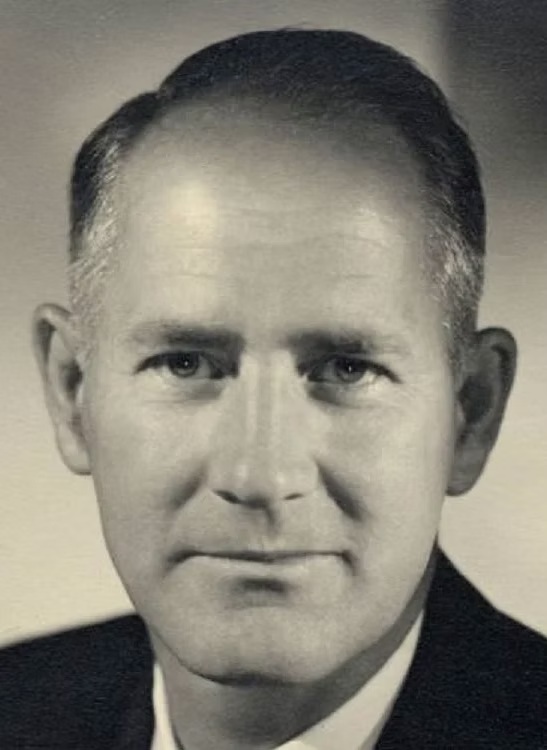
乔治·韦尔斯·比德尔(1903年10月22日-1989年6月9日)是美国遗传学家。比德尔出生于内布拉斯加州的一处农场,在内布拉斯加大学学习并对生态学产生兴趣;后前往康奈尔大学深造,与芭芭拉·麦克林托克(1902-1992)在同一实验室工作。获得博士学位后,比尔德在1931年入职加州理工学院、1946年接替托马斯·摩根(1866-1945)成为生物部主席。1961年,比德尔转任芝加哥大学的第七任校长,在任职的7年间大幅充盈师资队伍。
比德尔很有做实验的天赋,曾研究玉米、果蝇、面包红霉菌红面包微菌(neurospora)。1941年,比德尔与塔图姆开始用X射线诱导面包红霉菌红面包微菌产生突变体,在实验的基础上提出“一个基因一个酶”假说,即每个基因产生一种影响表现型的酶。如今我们提到基因如何作用于表现型,常常想到弗朗西斯·克里克1953年提出的中心法则,而比德尔和塔图姆在40年代已对此有深刻认识。他们的研究荣获1958年的诺贝尔生理学医学奖,与约书亚·莱德伯格(1925-2008)平分。
George Wells Beadle (October 22, 1903 – June 9, 1989) was an American geneticist. Beadle was born on a farm and studied at the University of Nebraska, where he became interested in ecology. He then entered Cornell University and joined the same lab with Barbara McClintock. After receiving his Ph.D., Beadle worked at California Institute of Technology (Cal-Tech) since 1931, and later succeeded Thomas Morgan as the chairman of the Biology Division. In 1961 Beadle surprised his colleges by accepting the presidency of the University of Chicago. He became a successful administrator and largely increased the faculty before retiring in 1968 at age 65.
Beadle was a talented experimenter and worked on maize, drosophila, and neurospora. He began to work with Edward Tatum (1909-1975) in 1941 and used X-irradiation to induce mutants of Neurospora, which led to “one gene–one enzyme” hypothesis that each gene was responsible for an enzyme that effected the phenotype. Their recognition of gene action in the 1940s preceded Waston and Crick, and Beadle and Tantum won the Nobel Prize in Physiology or Medicine in 1958 for “their discovery that genes act by regulating definite chemical events,” shared with Joshua Lederberg (American molecular biologist, 1925-2008).
20世纪初,遗传学家摩尔根通过果蝇的遗传实验,认识到基因呈线性排列于染色体上。但是基因是如何发挥功能的,一直没有定论。1941年,美国科学家乔治·韦尔斯·比德尔(George Wells Beadle)提出了“一基因一酶”假说,该理论认为每个基因直接产生一种酶来影响新陈代谢过程中的一个步骤,从而帮助研究人员将基因定性为化学分子,并确定这些分子的功能。比德尔和塔图姆共同获得了1958年的诺贝尔生理学或医学奖。
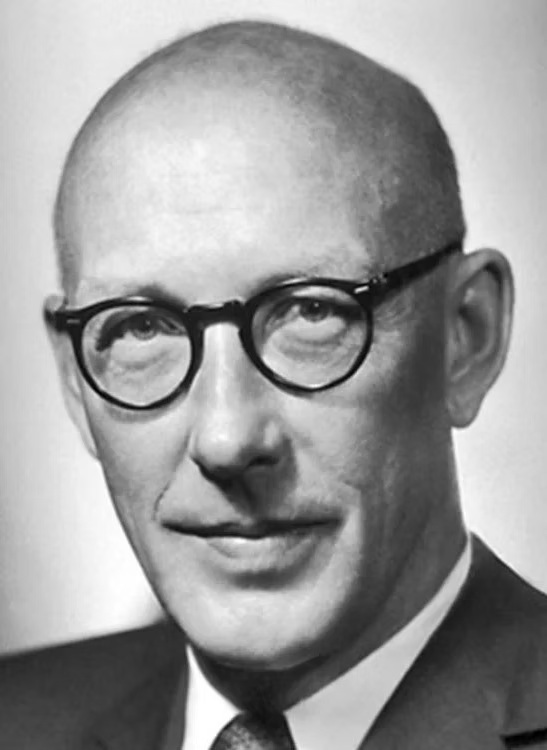
爱德华·劳里·塔图姆(1909年12月14日-1975年11月5日)是美国遗传学家与生物化学家,与乔治·韦尔斯·比德尔(1903-1989)共获1958年诺贝尔奖。塔图姆出生于科罗拉多州,是家中长子,父母均受过大学教育。塔图姆15岁时,其父任职为威斯康星大学的药理学教授;塔图姆在1931年于威斯康辛大学取得化学学士学位、1934年获生物化学博士学位。两年后,塔图姆前往荷兰的乌特勒支大学学习细菌学化学,期间与比德尔结识。两人于1941年开始研究面包红霉菌,为“一个基因一个酶”假说提供实验证据;这项研究为他们赢得了1958年的诺贝尔生理学-医学奖,其实验方法在第二次世界大战被用于批量生产青霉素。
战后,塔图姆先后在耶鲁大学、斯坦福大学任教,最终在1957年入职洛克菲勒医学研究所(现为洛克菲勒大学)。值得一提的是,1946年塔图姆在耶鲁时与约书亚·莱德伯格(1925-2008)结识,二者合作证明大肠杆菌可以有性繁殖,即当两种不同的大肠杆菌突变体被放在一起时,会产生第三个新菌株,塔图姆称之为基因重组。
Edward Lawrie Tatum (December 14, 1909 – November 5, 1975) was an American geneticist and biochemist, and won the Nobel Prize in 1958 together with George Wells Beadle (1903–1989). Tatum was born to a well-educated family in Colorado as the eldest son of three children. When Tatum was fifteen, his father accepted a position as a pharmacology professor at the University of Wisconsin, where Tatum earned his A.B. in chemistry in 1931 and Ph.D. in biochemistry in 1934. Two years later, Tatum went to the University of Utrecht in the Netherlands to study bacteriological chemistry and connected to George Beadle. They began to work on neurospora in 1941 and provided experimental evidence for one gene – one enzyme theory, and together won the Noble Prize in Physiology or Medicine in 1958. Tatum and Beadle’s experiment on neurospora helped to produce large amounts of penicillin during World War II.
After the war, Tatum taught at Yale University, Stanford University, and finally took a position at the Rockefeller Institute for Medical Research (now Rockefeller University) in 1957. In addition to collaborating with Beadle, Tatum also worked with Joshua Lederberg (1925-2008) when he was at Yale in 1946 and proved that the bacterium Escherichia coli reproduced sexually - when two different kinds of mutant were put together, a third new strain resulted, which Tatum called genetic recombination.
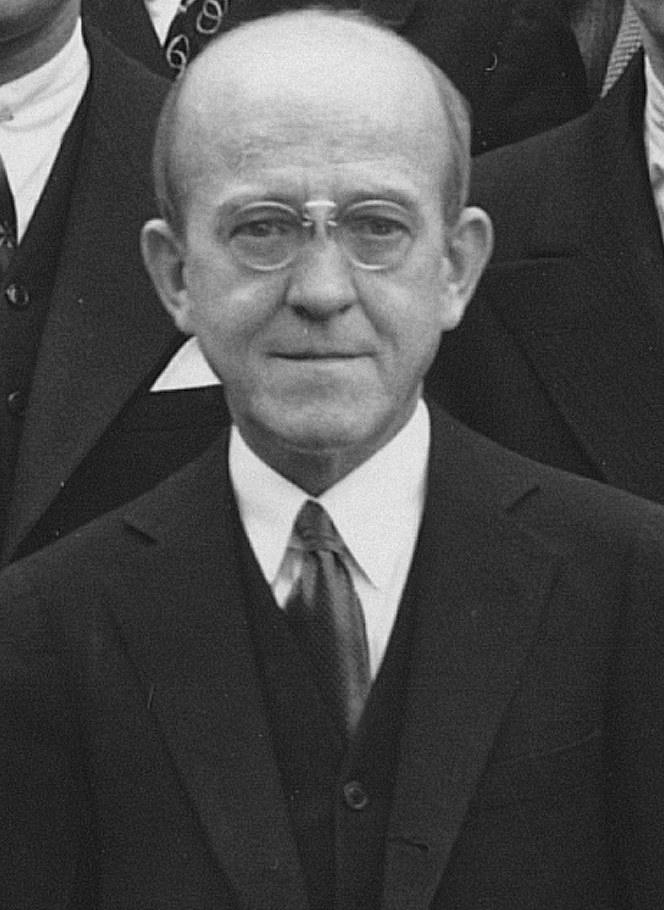
奥斯瓦尔德·艾弗里(Oswald Avery),全名奥斯瓦尔德·西奥多·艾弗里(Oswald Theodore Avery),1877年10月21日出生于加拿大新斯科舍省哈利法克斯,1955年2月20日卒于美国田纳西州纳什维尔,加拿大出生的美国细菌学家。他的研究帮助确定DNA是导致遗传的物质,从而为分子遗传学的新科学奠定了基础。他的工作也有助于理解免疫过程的化学性质。
艾弗里于1904年获得纽约市哥伦比亚大学内科和外科医生学院的医学学位。在临床实践中工作了几年后,他加入了布鲁克林的Hoagland实验室,并将注意力转向细菌学研究。1913年,他加入了纽约市洛克菲勒研究所医院。基于包膜的多糖组成可以变化的认识,艾弗里将肺炎球菌分类为不同类型的肺炎球菌。他还发现,多糖可以刺激免疫反应,特别是抗体的产生;他也成为第一个证明蛋白质以外的物质可以这样做的人。
Oswald Avery, in full Oswald Theodore Avery, (born October 21, 1877, Halifax, Nova Scotia, Canada—died February 20, 1955, Nashville, Tennessee, U.S.), Canadian-born American bacteriologist whose research helped ascertain that DNA is the substance responsible for heredity, thus laying the foundation for the new science of molecular genetics. His work also contributed to the understanding of the chemistry of immunological processes.
Avery received a medical degree from Columbia University College of Physicians and Surgeons in New York City in 1904. After a few years in clinical practice, he joined the Hoagland Laboratory in Brooklyn and turned his attention to bacteriological research. In 1913 he joined the staff of the Rockefeller Institute Hospital in New York City. Based on the recognition that the polysaccharide composition of capsular envelopes can vary, Avery helped classify pneumococci into different types. Avery also found that the polysaccharide could stimulate an immune response—specifically, the production of antibodies—and was the first to demonstrate that a substance other than a protein could do so.
1932年,艾弗里将注意力转向了英国微生物学家弗雷德里克·格里菲斯(Frederick Griffith)的实验。艾弗里和许多其他科学家一起着手确定使转化发生的物质的化学性质。1944年,他和他的同事麦克林·麦卡蒂(Maclyn McCarty)以及科林·麦克劳德(Colin MacLeod)报告说,转化物质,即细胞的遗传物质,是DNA。最终,DNA的作用得到了证实,艾弗里对遗传学的贡献得到了认可。
In 1932 Avery turned his attention to an experiment carried out by a British microbiologist named Frederick Griffith. Avery, along with many other scientists, set out to determine the chemical nature of the substance that allowed transformation to occur. In 1944 he and his colleagues Maclyn McCarty and Colin MacLeod reported that the transforming substance—the genetic material of the cell—was DNA. This result was met initially with skepticism, as many scientists believed that proteins would prove to be the repository of hereditary information. Eventually, however, the role of DNA was proved, and Avery’s contribution to genetics was recognized.
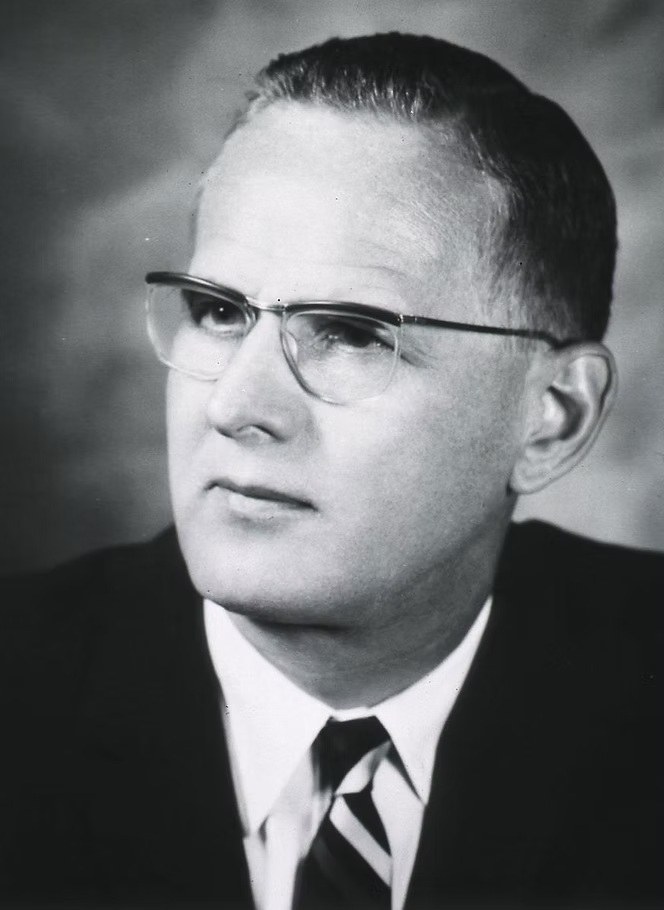
麦克林·麦卡蒂(Maclyn McCarty),1911年6月9日出生于美国印第安纳州南本德,2005年1月2日卒于纽约州纽约市,美国生物学家,与奥斯瓦尔德·艾弗里(Oswald Avery)和科林·麦克劳德(Colin M. MacLeod)一起,首次证实了活细胞的遗传物质是脱氧核糖核酸(DNA)。
麦卡蒂曾就读于斯坦福大学(理学学士,1933年)和约翰霍普金斯医学院(医学博士,1937年),之后于1940年加入纽约大学的威廉·蒂利特团队。蒂利特不仅向麦卡蒂介绍了肺炎球菌的研究,还安排他与艾弗里在纽约市洛克菲勒研究所(现为洛克菲勒大学)的实验室进行合作。麦卡蒂于1950年成为该研究所的成员,后来担任其副主席(1965-78)。从1960年到1974年,他是学校医院的主治医师。他还担任纽约市公共卫生研究所所长(1985-92)。
Maclyn McCarty, (born June 9, 1911, South Bend, Indiana, U.S.—died January 2, 2005, New York, New York), American biologist who, with Oswald Avery and Colin M. MacLeod, provided the first experimental evidence that the genetic material of living cells is composed of deoxyribonucleic acid (DNA).
McCarty attended Stanford University (B.S., 1933) and Johns Hopkins School of Medicine (M.D., 1937) before joining William S. Tillett at New York University in 1940. Tillett not only introduced McCarty to the study of pneumococcic bacteria but also arranged for him to work with Avery in his laboratory at the Rockefeller Institute (now Rockefeller University) in New York City. McCarty became a member of the institute in 1950 and later served as its vice president (1965–78). From 1960 to 1974 he was physician in chief at the school’s hospital. He also chaired New York City’s Public Health Research Institute (1985–92).
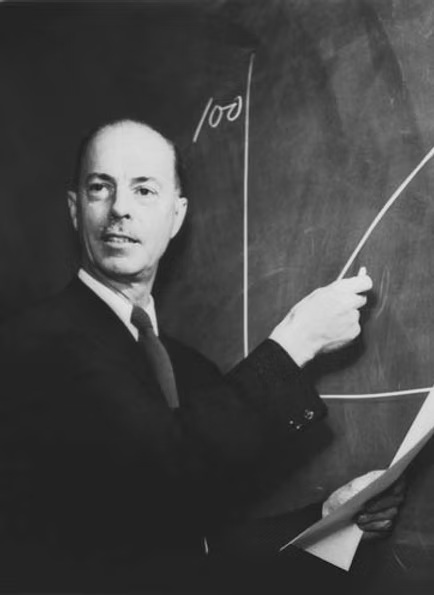
科林·芒罗·麦克劳德(1909年1月28日-1972年2月11日)是一名加拿大裔美国遗传学家,和奥斯瓦尔德·艾弗里(Oswald Avery)和麦克林·麦卡蒂(Maclyn McCarty)共同证明的DNA是导致肺炎双球菌发生转化的分子,为证明DNA为遗传信息的携带者作出了贡献。麦克劳德的母亲是一名教师,父亲是苏格兰长老会的牧师。他小学跳过了三个年级之后,于16岁进入麦吉尔大学,并在23岁获得了医学博士学位。
早年,麦克劳德和艾弗里、麦卡蒂三人共同完成了肺炎双球菌的体外转化实验,证明了DNA是肺炎双球菌的转化因子,这项工作被称为艾弗里-麦克劳德-麦卡蒂实验,随后在他们基础上的一系列实验证明了DNA是主要的遗传物质。1941年,他被任命为纽约大学医学院微生物学系主任,日后,他先后进入陆军流行病学委员会、美国国立卫生研究院,当选美国国家科学院院士,主要研究对美国军事人员健康构成威胁的流行病问题;后期主要协助东南亚条约组织研究解决霍乱的方法。
Colin Munro MacLeod (January 28, 1909 -- February 11, 1972) was a Canadian-American geneticist who along with Oswald Avery and Maclyn McCarty, proved that DNA is the molecule responsible for the transformation of pneumoniae. Their research makes contribution to proving that DNA is the carrier of genetic information. Colin's mother was a teacher and his father was a Presbyterian minister in Scotland. After skipping three grades in elementary school, he enrolled at McGill University at 16 and earned his M.D. at 23.
At an early age, Macleod, and Avery and McCarty completed the vitro transformation experiments for Diplococcus pneumoniae, proving that DNA is the factor who contributes to the transformation. The experiment is also known as “Avery - Macleod - McCarty Experiment”. On the basis of them, a series of experiments proved that the DNA is the main genetic material. In 1941, he was appointed chairman of the Department of Microbiology at New York University School of Medicine. Later, he served on the Army Epidemiology Board, the National Institutes of Health, and was elected a member of the National Academy of Sciences. Later, he mainly assisted the Southeast Asian Treaty Organization to research approaches to solving cholera.
1944年2月,生理学家、医学家奥斯瓦尔德·艾弗里(Oswald Avery)和他的同事科林·麦克劳德(Colin MacLeod)及麦克林·麦卡蒂(Maclyn McCarty)共同宣布DNA是使得肺炎双球菌从无害的R型菌转化成有害的S型菌的转化因子。这项研究是现代细菌学的一项关键工作。
艾弗里、麦克劳德和麦卡蒂的研究基于德里克·格里菲斯的细菌研究。艾弗里和他在纽约洛克菲勒大学(当时的洛克菲勒研究所)的同事麦克劳德和麦卡蒂想要弄清楚这种转化因子的化学本质。
他们改进了纯化过程,最终得到的细胞提取物的碳、氢、氮、磷的含量与DNA的含量一致。为了确保不受RNA或蛋白质残基的干扰,他们在转化前用不同的酶处理细胞提取物。其中一种酶具有DNA聚合酶活性,只有它能杀灭提取物的转化活性,而胰蛋白酶、糜蛋白酶(两种蛋白酶)、RNA酶、蛋白磷酸酶和酯酶不影响转化活性。他们还能够表明,所有的后代都具有S型菌的特性。他们用这些后代的提取物重复实验,得到了相同的结果。
On February 1, 1944, physician and medical researcher Oswald Avery together with his colleagues Colin MacLeod and Maclyn McCarty announced that DNA is the hereditary agent in a virus that would transform a virus from a harmless to a pathogenic version. This study was a key work in modern bacteriology.
The achievement by the scientists Avery, MacLeod, and McCarty were based on Frederick Griffith’s studies on bacteria. Avery and his collaborators Colin MacLeod and Maclyn McCarty at Rockefeller University (then Rockefeller Institute) in New York wanted to elucidate the chemical nature of the transforming substance.
They refined the purification process until the result was a cell extract whose amounts of carbon, hydrogen, nitrogen and phosphorus corresponded to those of DNA. To ensure that the transformation was not induced by residues of RNA or proteins, they treated the cell extract with different enzymes prior to the transformation. One of these enzymes had a deoxyribonucleode polymerase activity described by Greenstein in 1940. Only this neutralized the transformation activity of the extract, while trypsin, chymotrypsin (two protein cleaving enzymes), ribonuclease, protein phosphatases and esterase had no effect on transformation activity. They were also able to show that all offspring inherited the S-properties and that the repetition of the experiment with extracts from these offspring led to the same results.
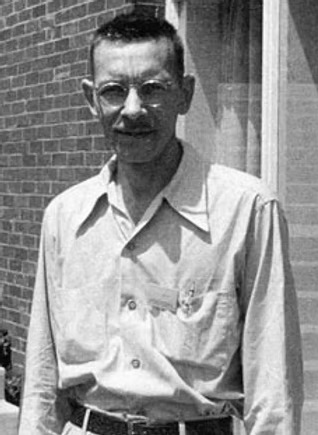
细菌学家、遗传学家阿尔弗雷德·戴·赫尔希(Alfred Day Hershey,1908年12月4日-1997年5月22日)1930年在密歇根州立大学获得化学学士学位,1934年获得细菌学博士学位,此后不久在圣路易斯华盛顿大学细菌学系任职。
他与萨尔瓦多·卢里亚(Salvador Luria)、马克斯·德尔布吕克(Max Delbrück)一起进行噬菌体实验,并观察到当两种不同的噬菌体菌株感染了相同的细菌时,这两种病毒可能会交换遗传信息。
1950年,他加入了华盛顿卡内基研究所的遗传学系,在那里他和玛莎·蔡斯(Martha Chase)于1952年进行了著名的赫尔希-蔡斯实验。这个实验证明:DNA是生命的遗传物质,而非蛋白质。他于1962年成为卡内基研究所(后来的冷泉港实验室)的主任,并于1969年与萨尔瓦多·卢里亚(Salvador Luria)和马克斯·德尔布吕克(Max Delbrück)分享获得诺贝尔生理学或医学奖,奖励他们在病毒复制及其遗传结构方面的发现。
Alfred Day Hershey (December 4, 1908 – May 22, 1997) was a bacteriologist and geneticist. He received his B.S. in chemistry at Michigan State University in 1930 and his Ph.D. in bacteriology in 1934, taking a position shortly thereafter at the Department of Bacteriology at Washington University in St. Louis.
He began performing experiments with bacteriophages with Salvador Luria, Max Delbrück, and observed that when two different strains of bacteriophage have infected the same bacteria, the two viruses may exchange genetic information.
In 1950, he joined the Carnegie Institution of Washington's Department of Genetics, where he and Martha Chase performed the famous Hershey–Chase experiment in 1952. This experiment provided additional evidence that DNA, not protein, was the genetic material of life. He became director of the Carnegie Institution (which later became Cold Spring Harbor Laboratory) in 1962 and was awarded the Nobel Prize in Physiology or Medicine in 1969, shared with Salvador Luria and Max Delbrück for their discovery on the replication of viruses and their genetic structure.
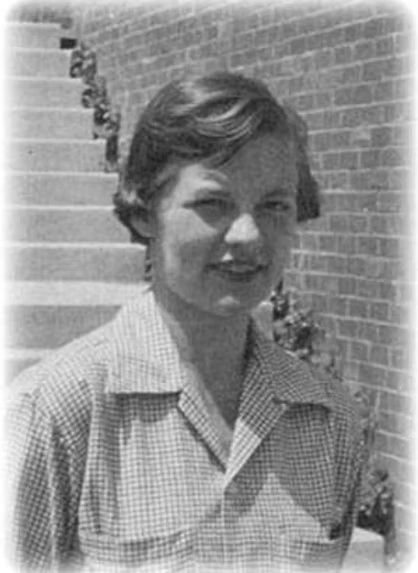
玛莎·考尔斯·蔡斯(Martha Cowles Chase,1927年11月30日-2003年8月8日),又名玛莎·爱泼斯坦(Martha C. Epstein),美国遗传学家。蔡斯于1950年获得伍斯特学院的学士学位,然后担任研究助理,于1964年获得南加州大学微生物学博士学位。1950年,蔡斯开始在冷泉港实验室担任阿尔弗雷德·赫尔希(Alfred Hershey)实验室的研究助理。
Martha Cowles Chase (November 30, 1927 – August 8, 2003), also known as Martha C. Epstein, was an American geneticist who in 1952, with Alfred Hershey, experimentally helped to confirm that DNA rather than protein is the genetic material of life. Chase received a bachelor's degree from the College of Wooster in 1950. And then received a PhD in Microbiology from the University of Southern California in 1964. In 1950, Chase began working as a research assistant at Cold Spring Harbor Laboratory in the laboratory of Alfred Hershey.
在20世纪早期,基因在化学上是DNA还是蛋白质是一个问题。1951年和1952年,阿尔弗雷德·赫尔希(Alfred Hershey)和玛莎·蔡斯(Martha Chase)在位于纽约冷泉港的华盛顿卡内基研究所进行了一系列实验。他们阐明了基因是由DNA,而不是蛋白质,组成的。这项实验也被称为赫尔希-蔡斯实验。
赫尔希和蔡斯利用了一种叫做放射性同位素标记的技术。第一个赫尔希-蔡斯实验旨在证实之前的实验发现,噬菌体的DNA和蛋白质组分是可分离的。赫尔希和蔡斯利用他们的放射性同位素标记方法复制了托马斯·安德森的实验结果。这表明,噬菌体由蛋白质外壳组成,外壳内含有DNA,噬菌体可以释放DNA,留下蛋白质外壳。接着,赫尔希和蔡斯的另一个实验表明,当某些噬菌体感染大肠杆菌时,噬菌体将它们的DNA注入宿主细菌。
赫尔希-蔡斯最著名的实验,也是最后的一次实验,被称为韦林搅拌机实验。赫尔希和蔡斯的研究表明,噬菌体只将它们的DNA注入宿主细菌中,而DNA是噬菌体复制的遗传物质。实验中,赫尔希和蔡斯准备了两份大肠杆菌样本。他们用放射性磷标记的噬菌体感染一个样本,用放射性硫标记的噬菌体感染另一个样本。然后,他们在搅拌器中分别搅拌这两个样品。在标记了DNA但没有标记蛋白质的磷标记样本中,搅拌器去除了40%的标记颗粒。在硫标记了蛋白质但没有标记DNA的样本中,搅拌器去除了80%的标记颗粒。这些结果表明,混合器去除噬菌体的蛋白质部分比DNA部分多得多,这表明在感染期间,蛋白质可能留在了细胞外。蛋白质不可能是复制的遗传物质,因为蛋白质从未进入细胞。
In the early twentieth century, it was an issue whether genes were chemically DNA or protein. In 1951 and 1952, Alfred Hershey and Martha Chase performed a series of experiments at the Carnegie Institute of Washington in Cold Spring Harbor, New York. They clarified that genes were made of DNA rather than protein. Their experiments are also known as the Hershey-Chase experiments.
Hershey and Chase took advantage of a technique called radioactive isotope labeling. The first Hershey-Chase experiment aimed to confirm previous experimental findings that the DNA and protein components of phages were separable. Hershey and Chase replicated Thomas Anderson’s experimental results using their radioactive isotope labeling method. Showing that phages consisted of a protein shell, or coat, with DNA inside the shell, and the phages could release their DNA and leave behind their protein coats. Then in another Hershey-Chase experiment, Hershey and Chase showed that when certain phages infected E. Coli, the phages injected their DNA into the host bacterium.
The most well-known Hershey-Chase experiment was the final experiment, which is also called the Waring Blender experiment. Hershey and Chase showed that phages only injected their DNA into host bacteria, and that the DNA served as the replicating genetic element of phages. For their experiment, Hershey and Chase prepared two samples of E. Coli. They infected one sample with radioactive phosphorus-labeled phages, and the other sample with radioactive sulfur-labeled phages. Then, they stirred the two samples each in a Waring Blender. In the phosphorus-labeled sample that marked DNA but not protein, the blender removed forty percent of the labeled particles. In the sulfur-labeled sample that marked protein but not DNA, the blender removed eighty percent of the labeled particles. Those results suggested that the blender removed much more of the protein parts of the phage than the DNA parts, which indicated that the protein likely remained outside of the cell during infection. The protein could not be the replicating genetic material, for the protein had never entered into the cell.
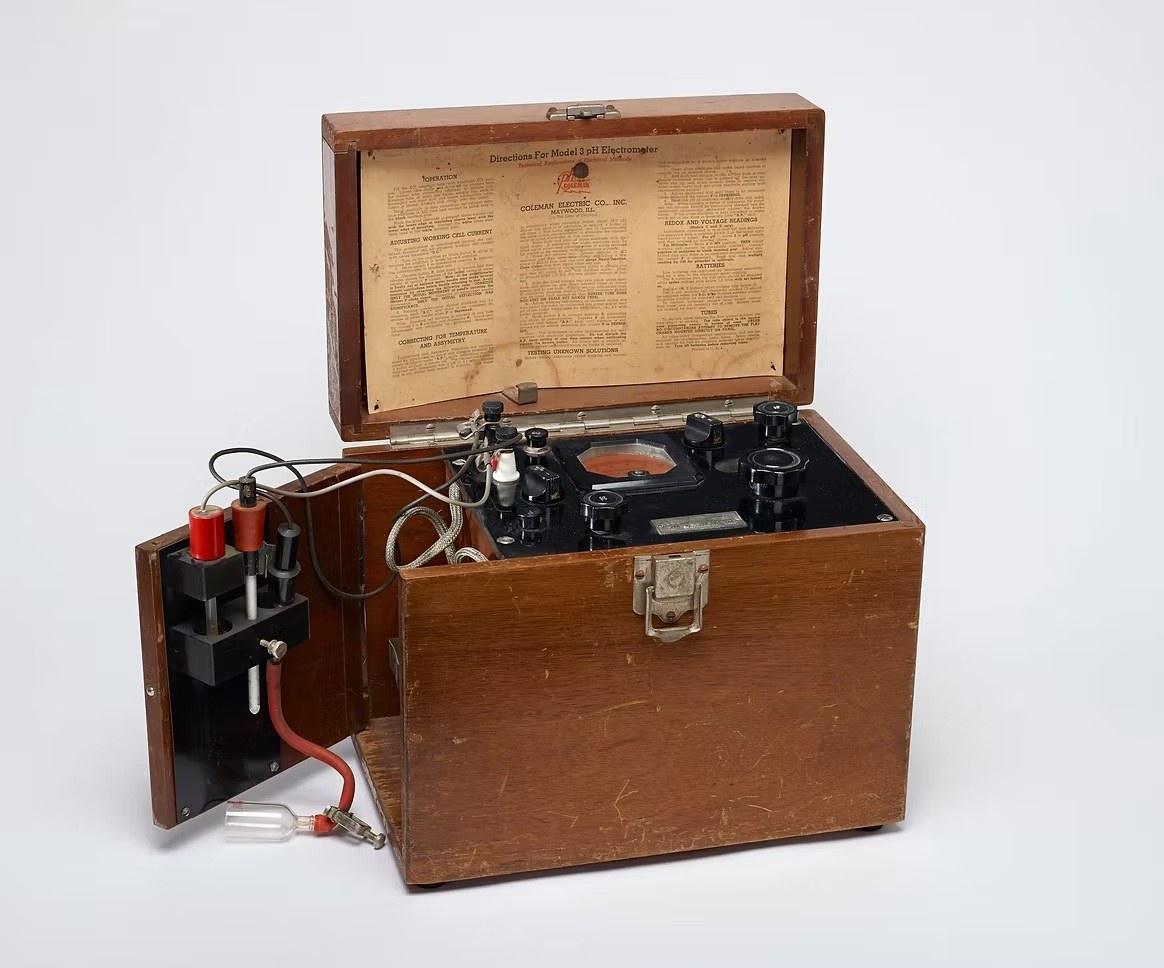
Self contained pH meter with wooden exterior; hinged top door opens to reveal meter face and inlaid paper instructions for use; the double scale reads pH and millivolts; hinged door on left side of wooden case opens to reveal electrode compartment.
Science History Institute. Coleman Model 3D PH Meter. Photograph, 2016.
Science History Institute. Philadelphia.
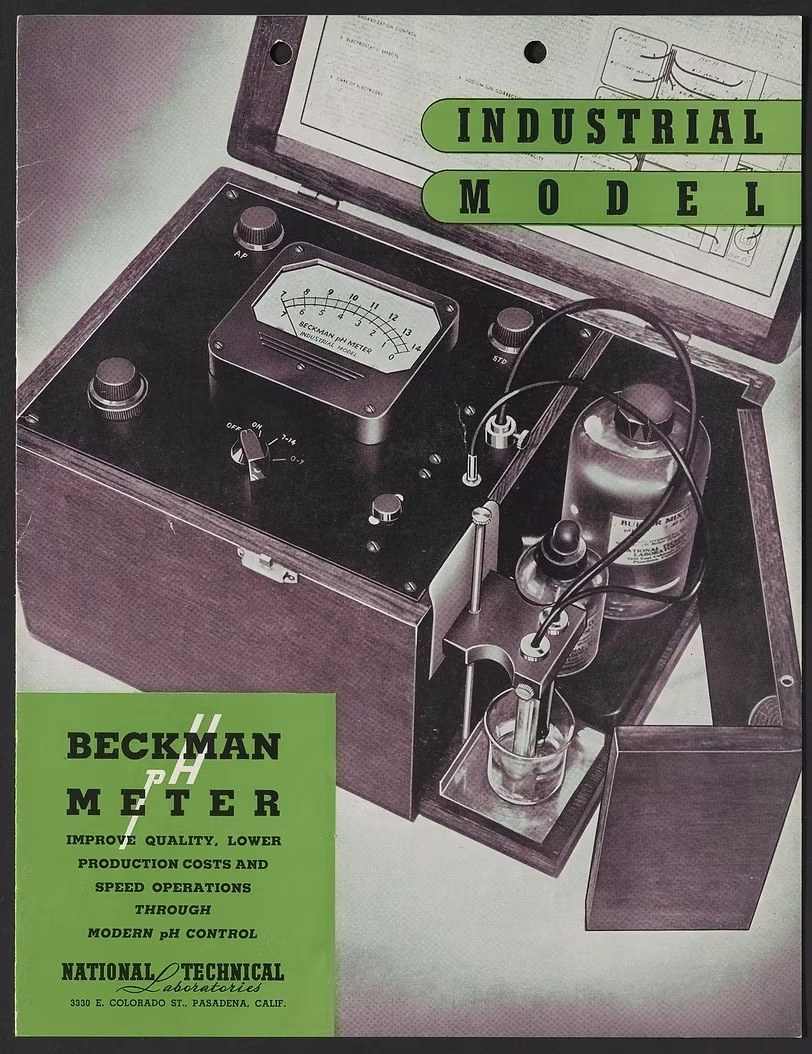
本产品的刻度盘的pH值在0-13之间,间隔为0.1pH值,用于实验室的精确测量。结合pH和毫伏标度,允许pH测定和氧化还原电位的测量。
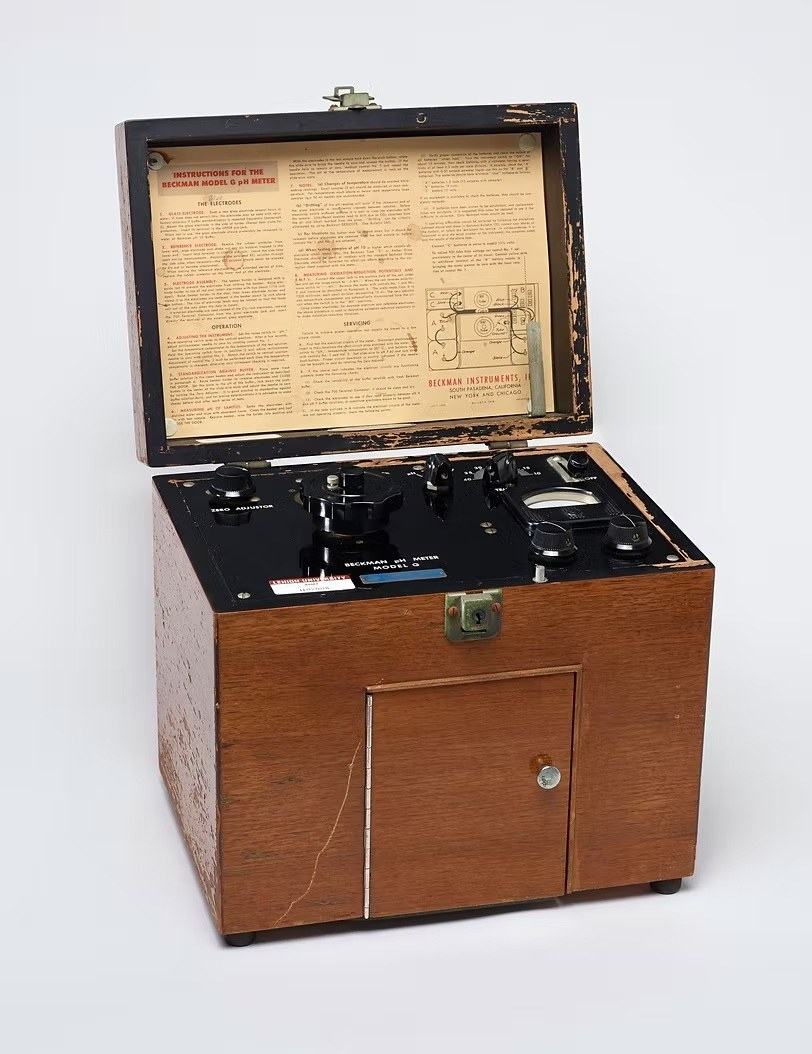
Self-contained pH meter with wooden exterior; hinged top door opens to reveal meter face and inlaid paper instructions for use; the dial is calibrated from pH 0 to pH 13 in .1 pH divisions; porcelain enamel-lined electrode compartment at front of pH meter.
Designed for precise measurements in the laboratory but also suitable for field and factory use. With combination pH and millivolt scale, permitting both pH determinations and oxidation-reduction potential measurements, new type glass and calomel electrodes and lock-down switch.
Portable, self-contained, direct reading instrument suitable for practically all substances.
Science History Institute. Beckman Model G Glass Electrode PH Meter. Photograph, 2016. Science History Institute. Philadelphia.
1934 年,阿诺德·贝克曼(Arnold Beckman)应加利福尼亚柑橘业的一位化学家的要求发明了他的第一台 pH 计,这位化学家需要一种准确的方法来测量产品的酸度。1937年,由此产生的带有玻璃电极的“酸度计”更名为 G 型 pH 计,并由贝克曼公司,即国家技术实验室大规模生产。该仪器不仅促进了国家技术实验室和贝克曼仪器的快速发展,也开启了电子科学仪器行业的快速发展。
Arnold Beckman invented his first pH meter in 1934 at the request of a chemist from the California citrus industry, who needed an accurate way to measure the acidity of his product. The resulting “acidimeter” with its glass electrode was renamed the Model G pH meter in 1937 and produced on a larger scale by Beckman’s company, National Technical Laboratories. This instrument kicked off the rapid development not only of NTL and Beckman Instruments but also of the electronic scientific instrument industry.
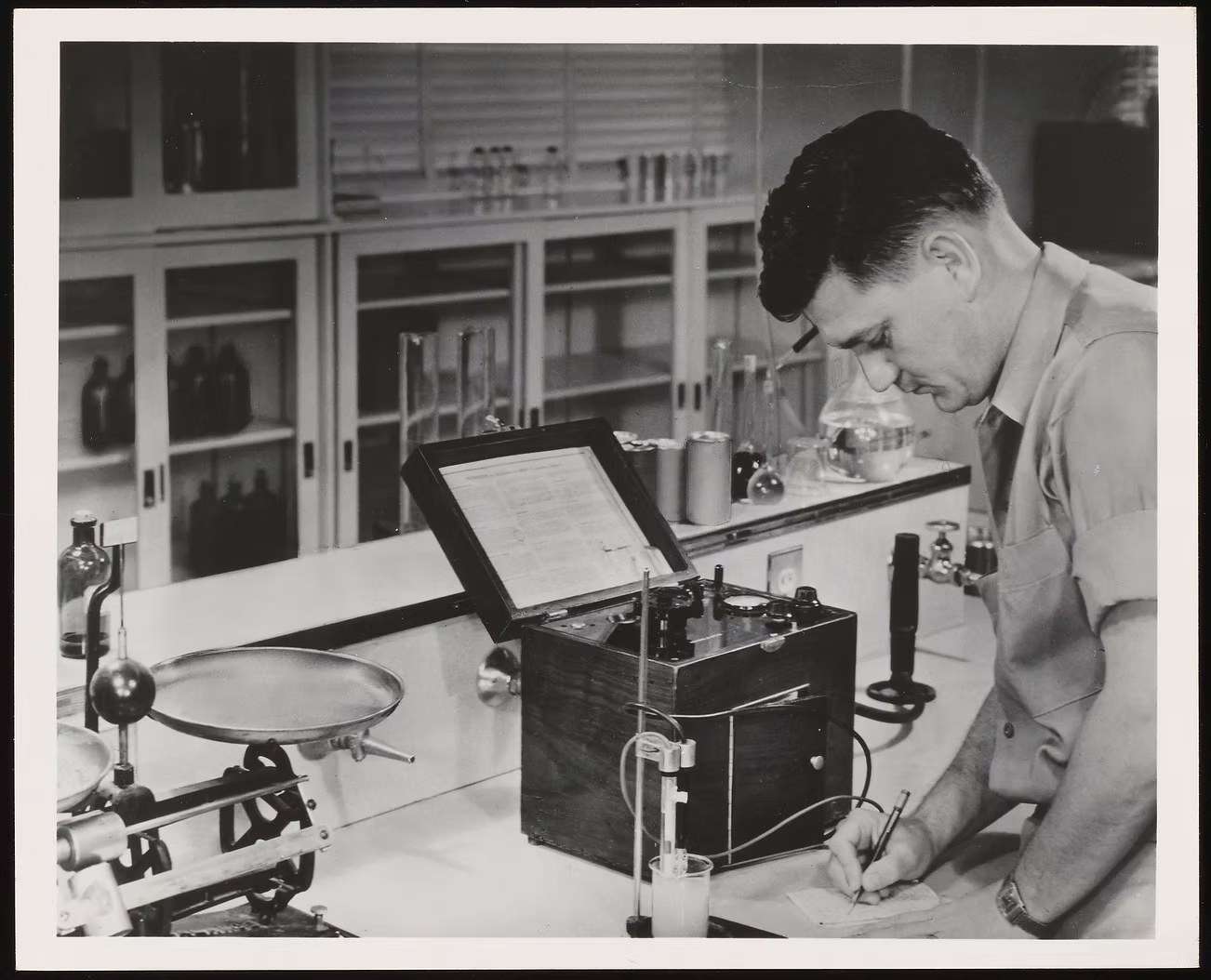
“Beckman Model G PH Meter in Use,” circa 1955. Beckman Historical Collection, Box 55, Folder 74. Science History Institute. Philadelphia.